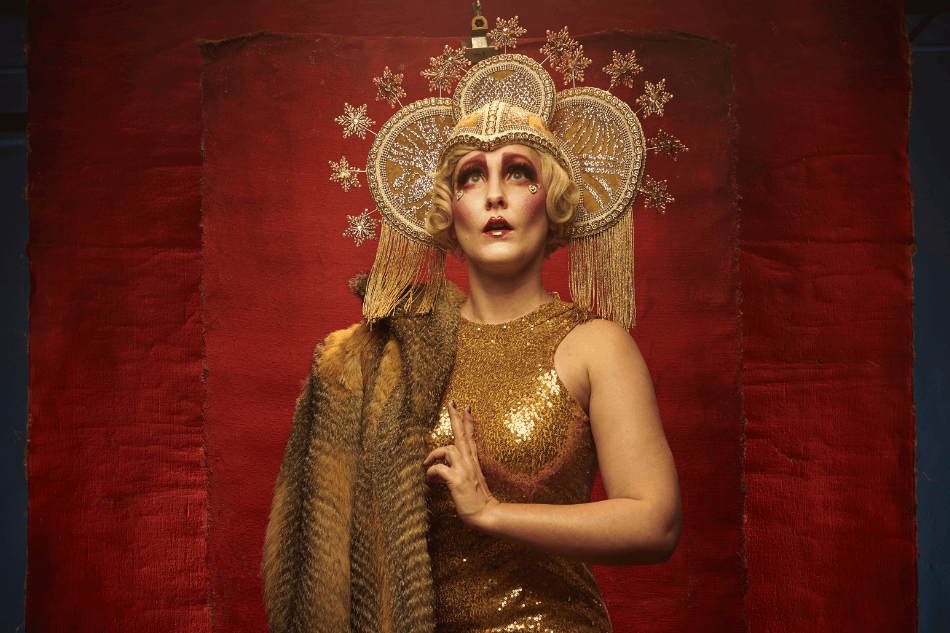
A hundred years later, in another decade of “roaring twenties” that feel anything but safe, Lilly Mortis is back on stage, insisting that cabaret is not nostalgia but a way of staying alive.
She is a cabaret mother, singer, writer and one of the most visible figures of the Berlin cabaret scene. As the leading diva and artistic director of formats like Kabaret Lilium and the new KABARET KLUB at Ballhaus, she builds worlds where queer theory does not stay in books, but shows up in glitter, jokes and sharp political side-comments.
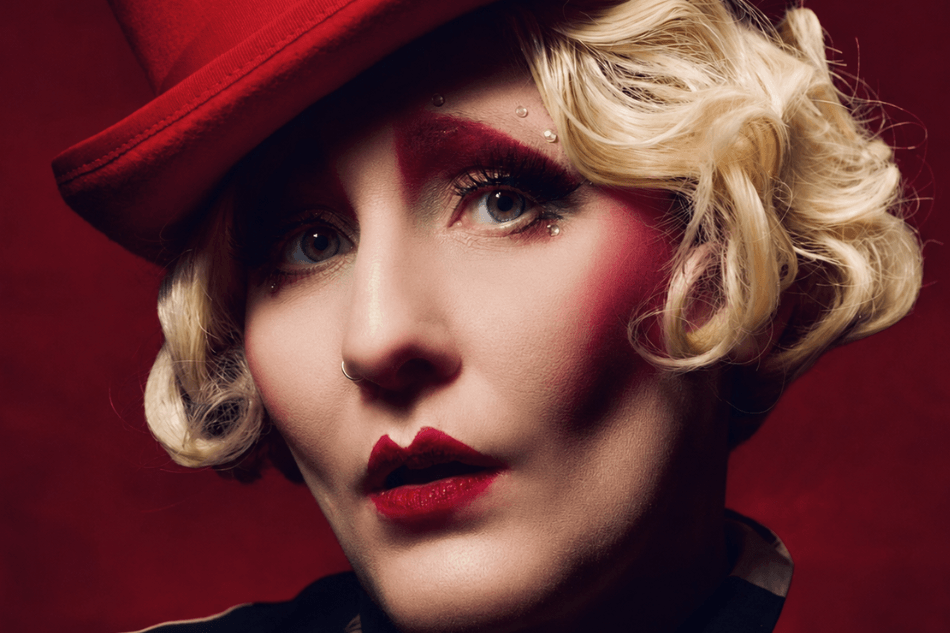
Weimar cabaret Berlin and the feeling of “again”
For Lilly, cabaret cannot be separated from the city where she does it. In our conversation she keeps circling back to Weimar Berlin. The cabaret and film scenes, the expressionist images, the gender-nonconforming performers, and the knowledge that all of this unfolded under the shadow of rising fascism.
She draws a line to the present moment. Another era of economic insecurity, right-wing gains and aggressive fantasies about “real” men and women. The culture feels loud and excessive again, but the background noise is fear. “It’s that sense of being in a very expressive, creative moment while something really ugly is building underneath,” she suggests.
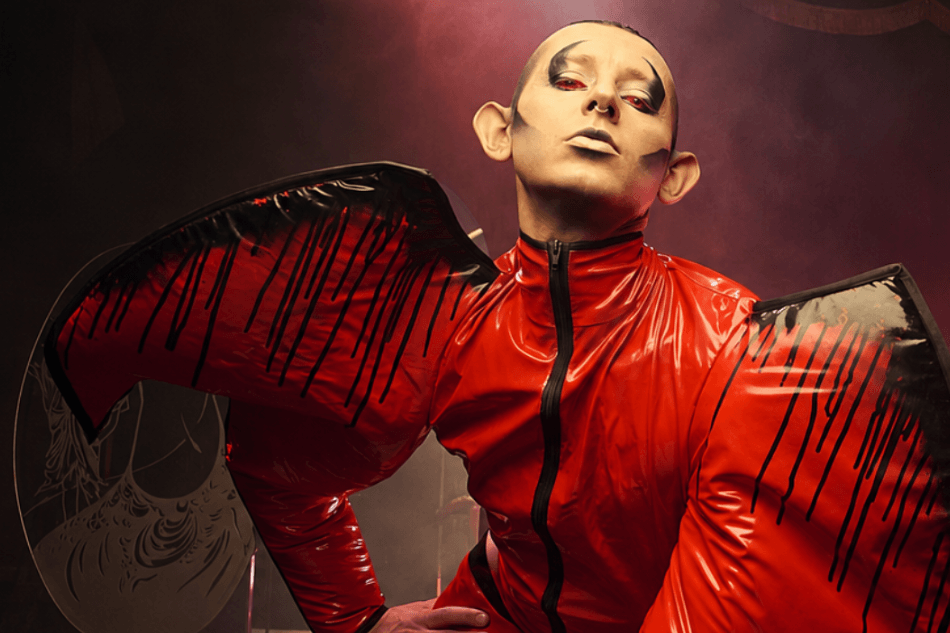
Cabaret, in that light, is less costume party and more early-warning system. A place that names the pressure without giving up on pleasure.
From King’s College to the stage
Long before Berlin, Lilly’s life was organized around universities. She studied German and English, added pedagogy and theatre studies, and eventually taught at King’s College London. On paper it looked like a stable academic path. In practice it meant splitting herself in two.
She describes a clear divide between her role as a young female lecturer and her desire to inhabit a visibly feminine, sensual, opinionated body. In the university context, that combination rarely felt welcome. Taking a performance course with a burlesque company in London became a way to test what claiming that body could look like.
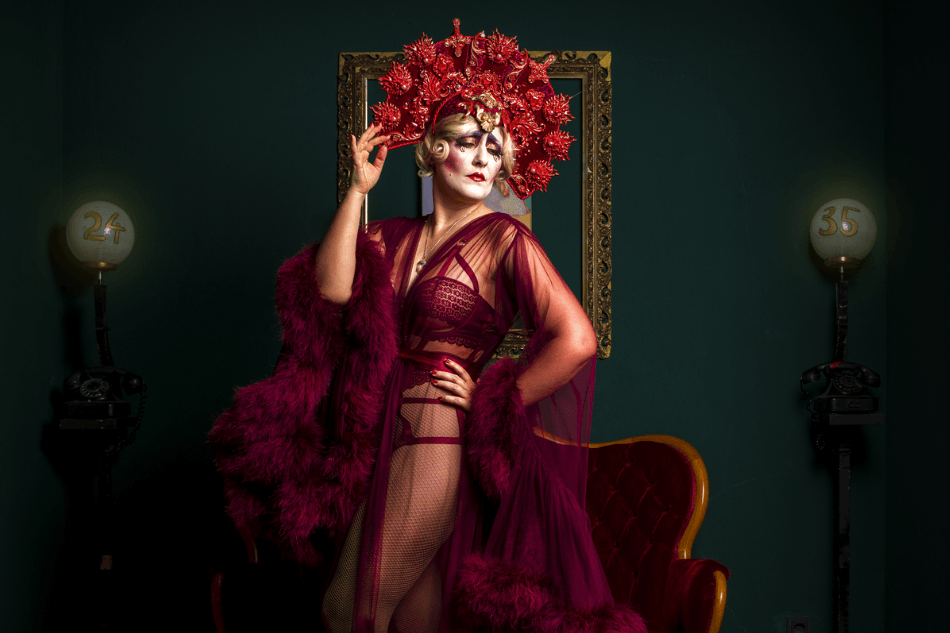
From there she moved back toward what she had always done, writing, speaking, singing, but now with a stage persona that refused to drop its femininity at the door. Cabaret was not a hobby next to work. It was the form where the split stopped making sense.
Lilly Mortis. The diva as queer figure
Her stage name, Lilly Mortis, grew out of that period. It plays with burlesque naming patterns and a Latin twist, but it also gives away her fascination with diva mythology.
In the interview she talks about how classic divas are always wired for tragedy. Glamorous women who burn too bright and die too young, adored and punished at the same time. Their image is camp and high drama, but underneath lies a script of punishment for being too much.
In queer culture, that figure becomes a mirror.
Queer audiences project onto the diva, worship her, quote her lines, and at the same time grapple with the violence that always seems to follow. Lilly builds her persona inside that tension. Hyper-femme, self-aware, leaning into the tragic potential without letting it end the story.
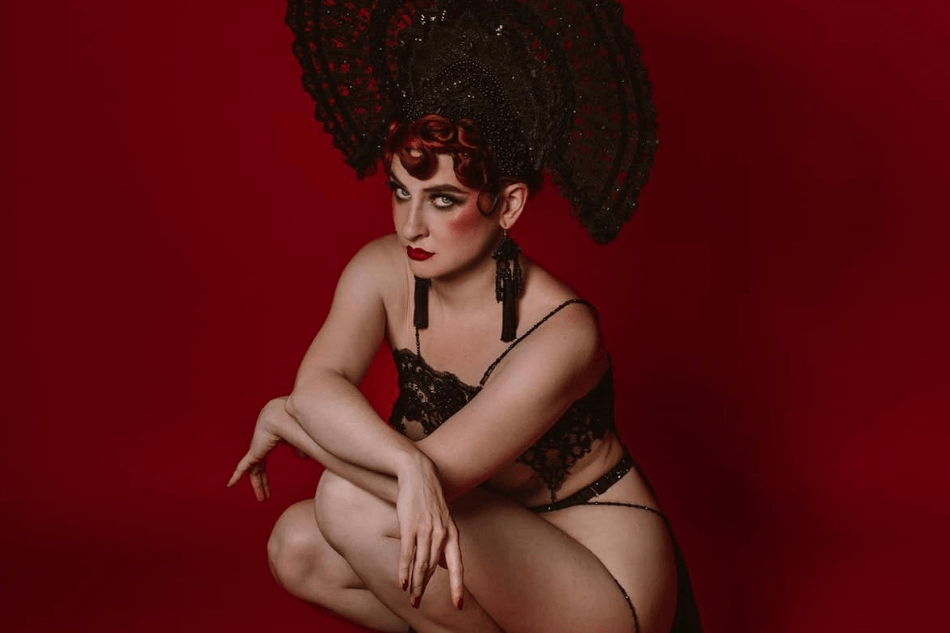
Kabaret Lilium. Community in sequins
Kabaret Lilium, one of Lilly’s ongoing projects, started from a practical need. She remembers nights and venues where queer performers and audiences could just show up and know they would find each other. Many of those spaces have disappeared. Others are under constant threat.
Kabaret Lilium tries to fill that gap by functioning as both show and meeting place. A recurring night that can hold regulars and newcomers, gossip and performance, flirting and politics.
The border between stage and audience is porous.
People drift through, bump into acts, become part of the energy instead of sitting safely in the dark.
It works less like a neat sequence of acts and more like a social ecosystem. One small piece of community infrastructure in a city that often markets its subcultures better than it protects them.
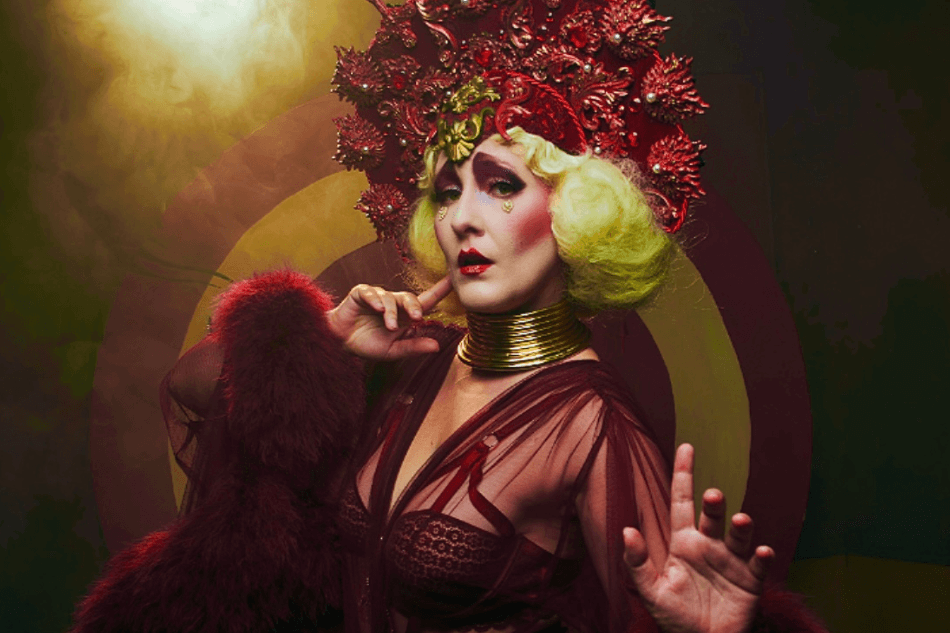
KABARET KLUB. Flagship for the new twenties
KABARET KLUB at Ballhaus is where Lilly concentrates her ambitions for a contemporary queer cabaret in Berlin. She describes it as a night that knows its Weimar ghosts, Anita Berber, expressionist film, Metropolis, but refuses to treat them as vintage styling.
Instead, those references are used to underline how close the parallels feel. A culture that celebrates excess while the political climate hardens. Queer people on stage while reactionary fantasies gain ground in parliament. KABARET KLUB is built for exactly that mood. Glitter and jokes on the surface, a constant awareness underneath that the ground is shaky again, that we are once more dancing on the volcano.
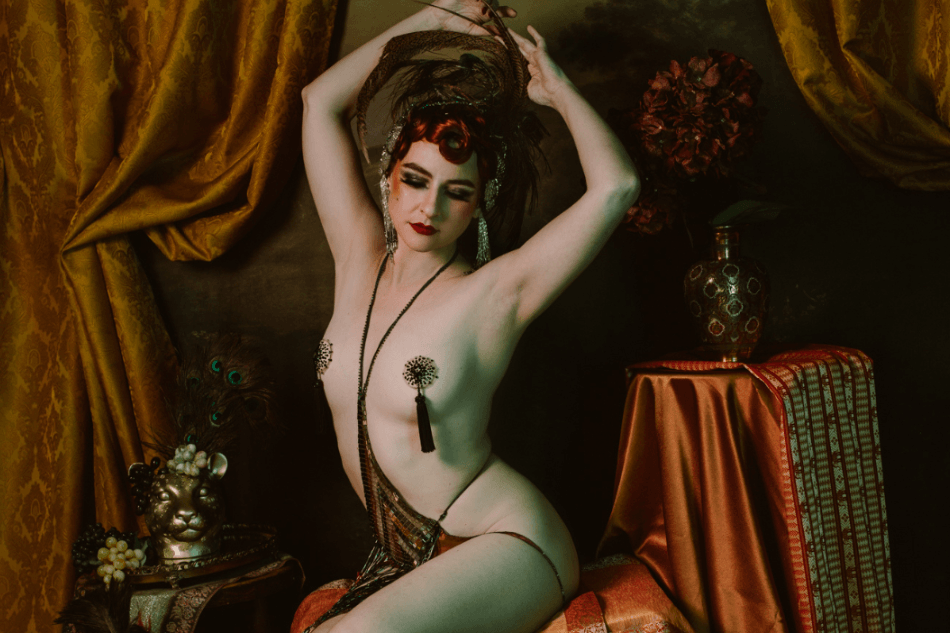
The format mixes live song, sharp hosting, drag and spoken-word segments with club energy. There are stretches where the show runs entirely on image and music. Others where it stops to speak directly about elections, fascism, or the everyday realities of misogyny and queerphobia.
Throughout the night, a recurring phrase sets the tone: “flashing lights, sparkling personalities, and a pegging of the patriarchy”. It is the mission statement.
Beauty as a trojan horse
A crucial part of Lilly’s strategy is aesthetic. She does not pretend that people come to cabaret evenings for theory. They come because something looks good, feels exciting, promises pleasure.
Again and again she returns to the same idea. The show has to be chic, fun, visually intense, otherwise “no one will show up”. The lights, the feathers, the champagne glasses are not extra. They are the way in. Beauty becomes a trojan horse for politics.
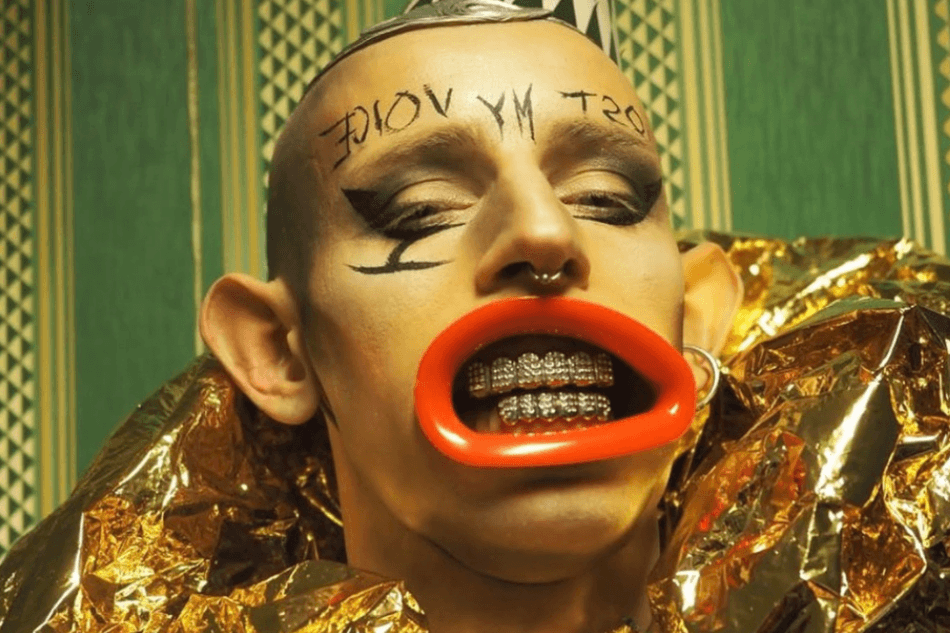
The surface is allowed to seduce so that, once people are already inside the world, deeper messages about power, bodies, care and solidarity can actually land. At the same time, spectacle without honesty has no interest for her. The shine only works if something real is moving underneath it.
Immersion without the buzzword
Lilly is sceptical of how casually the word “immersive” gets used in contemporary theatre language. What she describes for both Kabaret Lilium and KABARET KLUB, though, still fits the core of it. She wants to build spaces that feel like complete worlds rather than safe viewing positions.
In those worlds, the rules tilt. The usual distinctions between “normal” and “excessive”, between acceptable and inappropriate gender expression, between audience and performer, start to blur. People do not just watch. They inhabit. They stand, move, react, feel implicated.
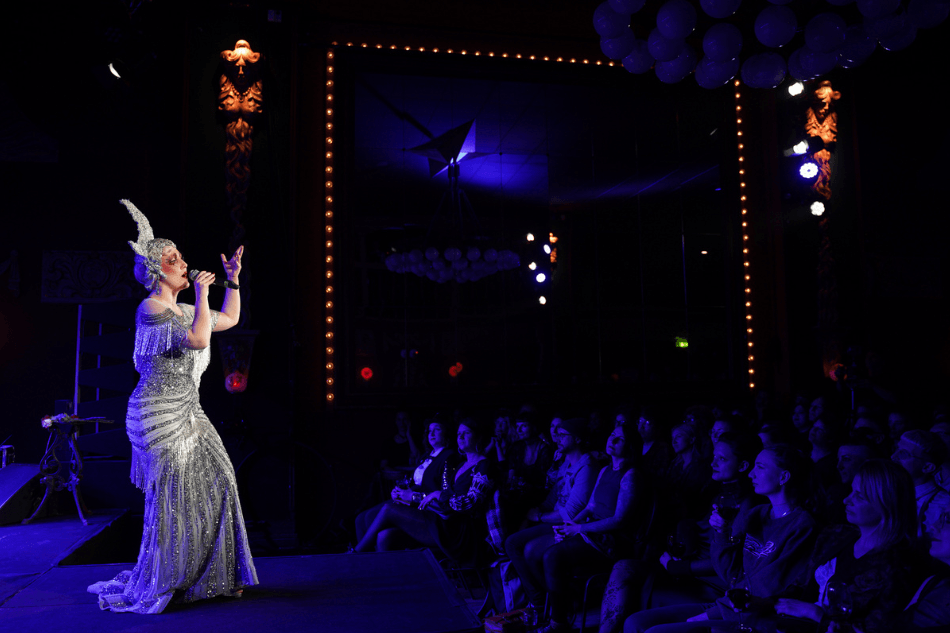
The aim is not to lecture the audience about patriarchy or fascism, but to let people feel what it means when those forces are actively resisted in the room. The joke, the song, the outfit, the small interaction at the bar, they all become part of a temporary micro-society where the hierarchies of outside are reversed or suspended.
Lilly Mortis’ route into all of this was through books and seminars.
Lilly studied Gender and Queer Studies
She also read Judith Butler on performativity, wrote academic work on literature and gender. At the time she assumed, almost naively, that these ideas were more widely known than they actually are.
Walking out of university, she realized how often everyday conversations still start from scratch. Whether patriarchy still exists, whether feminism is “over”, whether gender is anything more than biology. Cabaret became her way of moving those discussions into a different register.

Instead of explaining that gender is performed, she lets people watch it being performed, and mis-performed, and refused. Instead of arguing abstractly about structures, she stages evenings where those structures are mocked, flipped or simply treated as irrelevant to how people actually live.
Often, she suggests, people feel the shift in their bodies before they can name it. The understanding comes later, if at all.
What survival looks like on stage
Underneath all the references and aesthetics, Lilly’s insistence is simple. Certain things should not be controversial, yet they constantly are.
Every person has the right to exist without fear, to move through the world in their own gender and sexuality, to be free from violence and targeted hatred. No passport, status or body should make someone more disposable than another. These are, for her, non-negotiable basics, and yet they are precisely what needs to be defended in the current climate.
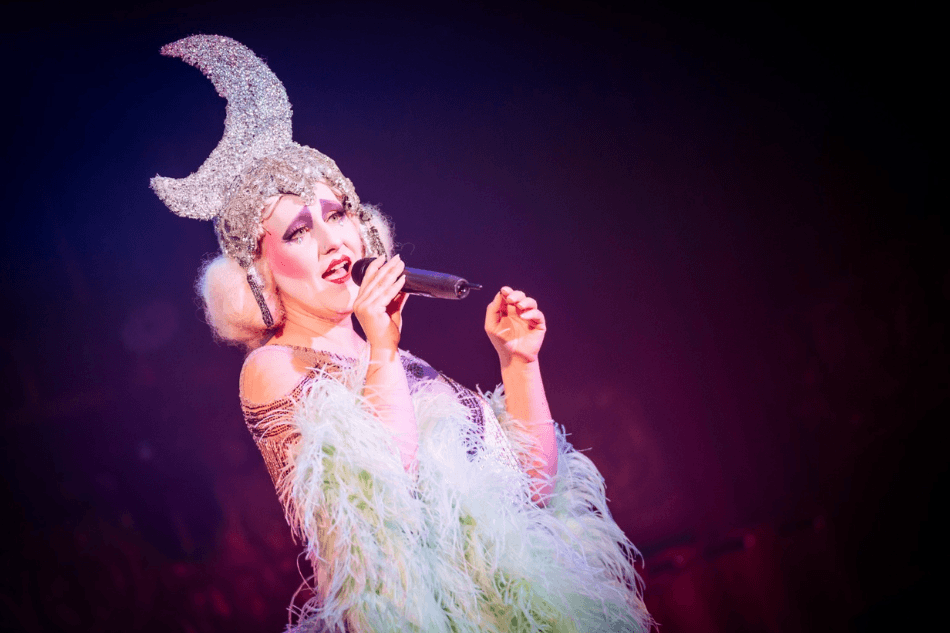
Cabaret, in that sense, is not a minor genre or a retro curiosity. It is a small but intense survival technology. A way of gathering, feeling, remembering and rehearsing how another world could look and feel while the volcano rumbles underneath.
The lights and jokes are part of that rehearsal. So is the decision to keep showing up, in a room full of queer bodies and voices who refuse to pretend that nothing is burning.
About Lilly Mortis
Lilly Mortis is an artivist working across cabaret, immersive theater and film. Beyond her stage work as MC, dramaturge and producer, she writes for the screen, with credits including Teaches of Peaches (Teddy Award, Berlinale) and KitKatClub – Kinks of Berlin, and sits on the curatorial and organizational team of the Queer Performance Festival (QPF) in Berlin.
A stage of her own
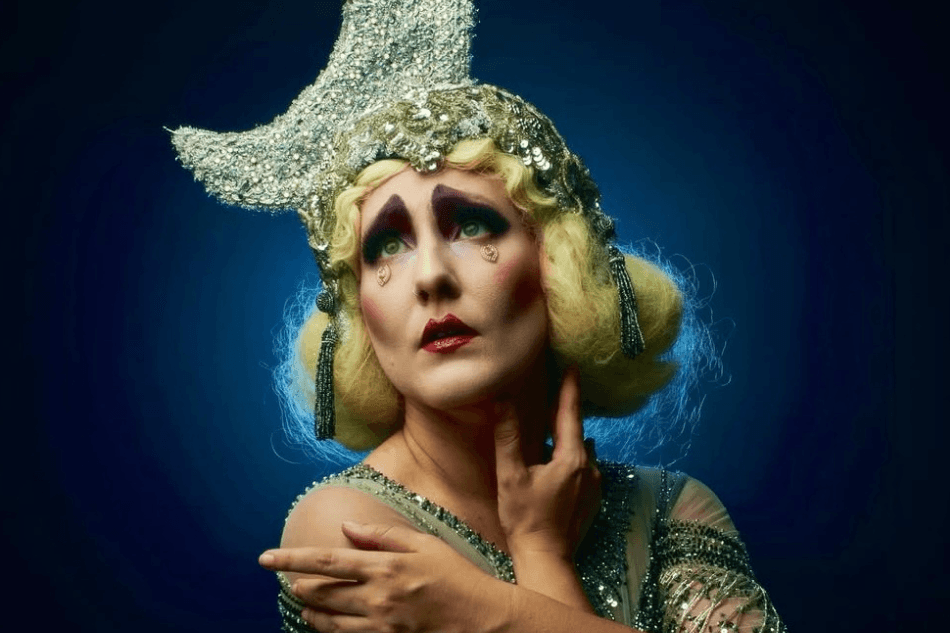
In September 2026, the volcano gets a new address on the cultural map. KABARET KLUB has been named part of this year’s TAG DER CLUBKULTUR festival week, an acknowledgment that lands somewhere between overdue and obvious. For Lilly, the club was never just a venue for a night out. It is a cultural space in its own right, and now the city agrees.

The recognition arrives alongside another kind of unveiling. Lilly also writes for the screen under the name Susanne Heuer, and her film KitkatClub – Kinks of Berlin opens in theaters on September 10, 2026. Its characters carry two identities, revealed slowly, unevenly, at their own pace. It is not hard to see why the story pulled at her. Somewhere in the writing of it, she decided to do the same, and bring her two names, her two lives, back into one frame.
Where to find Lilly Mortis
KABARET KLUB runs September 18, 2026, and October 2 and 3, 2026, at Ballhaus Berlin.
The next Kabaret Lilium is November 20, 2026.
Tickets and info can be found on berlinkinkcalendar.com.
Find Lilly on Instagram here.