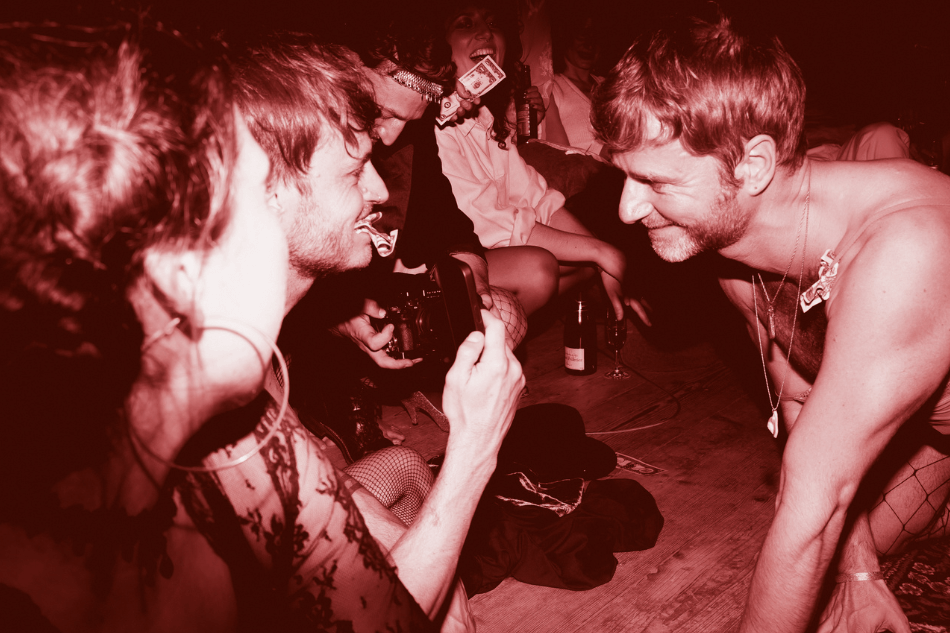
As a teenager, she found herself at the old Ostgut, the predecessor of Berghain. A single night set a lot in motion:
It was the first time she experienced how nightlife, sexuality, and hedonism can blend without immediately becoming destructive or dangerous.
Years later, as an explicitly sexpositive scene Berlin began, her perspective shifted. She discovered formats far from what she calls “classic penetrative standard sex”:
- Cuddle parties
- Massage events
- Festivals offering workshops like “How to have a good threesome”
- Naked parties and experimental spaces
“I left every event differently than I entered,” Nike Wessel says. “The assumptions I had about myself — ‘I like this, this is who I am’ — never completely held true. You keep discovering new versions of yourself.”
For her, it’s not about collecting practices but about allowing herself to grow over many years.

What Makes Sexpositive Scene Berlin Different
How do you explain this scene to someone who has never been to Berlin; maybe not even to Europe, maybe someone from a small village or a place without queer community?
For Nike, sexuality isn’t a niche interest but something fundamentally human:
- It concerns people of every age.
- It doesn’t suddenly begin at 16.
- It doesn’t end when a child arrives.
Precisely because sexuality is so central, it is heavily controlled, restricted, and moralized in much of the world.
Berlin, for her, is a countermodel. Not perfect, but particular.
The scene draws from:
- Queer and gay-lesbian communities that had early space in both East and West Berlin
- The club and nightlife environment where people come to meet
- Art, theatre, music, poetry, performance, and opulent costuming
“It’s a mix of high creativity, openness, and a societal tolerance,” she says. “As long as it happens between consenting adults, you can do whatever you want in any basement.”
Sex here isn’t only about desire. It is also play, humor, and the delightfully absurd. You’re allowed to experiment, to fail, to change your mind.
Consent as the Invisible Infrastructure
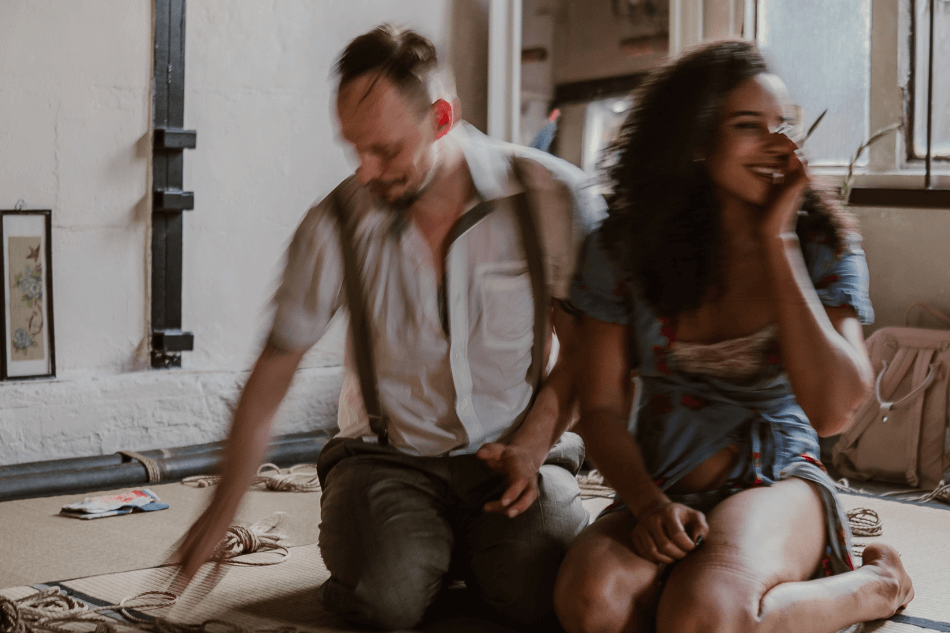
One theme comes up repeatedly, quietly but consistently: consent culture.
It becomes especially visible in a format called “Liquid Love”:
Participants lie in a small inflatable pool, oiled, eyes covered. They can’t see anything; bodies glide over one another; boundaries blur on the surface.
To ensure they don’t blur internally, something very sober is required: rules.
- Boundaries are discussed beforehand.
- It’s clear what is allowed and what is not.
- Everyone knows what they’re consenting to and what they’re not.
“One essential reason things work so well in Berlin is the focus on consent,” Nike says. “Talking about rules, what’s okay and what’s not. And the fact that many spaces are sober, drug-free. Those are the places I recommend most.”
Here, consent isn’t an abstract principle but a practice:
Check-ins, safewords, and clear frameworks that make it possible to relax or say no.
The humor is part of it too; the awkwardness, the absurdity, the things that don’t go perfectly:
“I love the humor, the weirdness, not taking oneself too seriously, even sexually. If we accept that desires and identities can shift, then it’s okay if something doesn’t work and looks a little silly.”
BDSM: From Misconceptions to a School of Communication
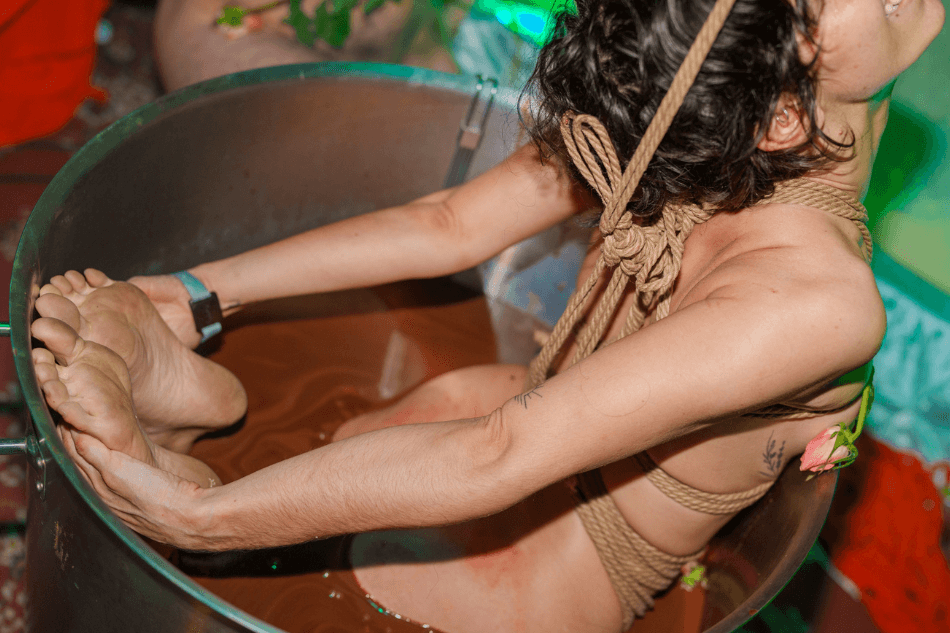
BDSM is one of the areas where external projections and internal realities diverge most strongly.
Nike describes having had many prejudices. From the outside, a lot looked like recycled patriarchy:
bound women, power dynamics, images more associated with the evening news than with liberation.
“I had so many prejudices,” she says. “It just didn’t look right from the outside.”
Experiencing it herself changed her perspective.
Many things that look dramatic, she learned, feel entirely different.
What surprised her most:
In well-held BDSM settings, people often talk more clearly about needs, limits, and desires than in many “normal” relationships.
For her, BDSM becomes a kind of communication training:
- articulating boundaries
- expressing what you want
- staying attentive, awake, and present with another person
“The basics I learned there, I wish we taught them in schools and parliaments, not just in bondage studios,” she says.
Hardness, Patriarchy, and the Wish for a Softer World

The conversation doesn’t stay in the event bubble. Nike links what happens in basements, collectives, and clubs to larger political structures.
She talks about patriarchal and capitalist patterns that shape not only relationships but the entire planet:
resource extraction, environmental destruction, warfare, violence.
“Hate and violence don’t help anyone. Not even those who use them,” she says. “A society that’s softer and capable of genuine connection is better for everyone.”
Here, tenderness isn’t framed as a private luxury but as a social resource and something that has direct political meaning.
“You do you”: Gender, Pronouns, and the Permission to Be Imperfect

When it comes to gender roles and pronouns, Nike takes a straightforward but relaxed approach.
The core principle:
Everyone should describe and live themselves however it feels right, with no pronouns, with one, with three, or with five.
“You do you. Every person should choose what fits,” she says. “But it doesn’t have to throw me into confusion.”
What matters to her is that tolerance goes both ways.
Mistakes happen, including with pronouns.
“If I make a mistake and use the wrong pronoun, I ask for kindness. The same kindness I give others. Tolerance isn’t a one-way street.”
It’s not about perfection but about a culture where people aren’t attacked for still learning.
Fear of Losing Control: When the World Feels Too Much
What about people who find all this overwhelming and feel the world is becoming too complex, too fluid?
Nike sees fear not as a flaw but as a signpost.
“Fear always shows a need,” she says. “When someone is terrified of something, it often points to an internal theme.”
Rather than obsessing over every possible identity or practice, she suggests simplifying:
- What kind of closeness do I need?
- How do I want to be touched?
- Am I looking for one partner or several?
- Do I want to be held, kissed, to explore or simply rest?
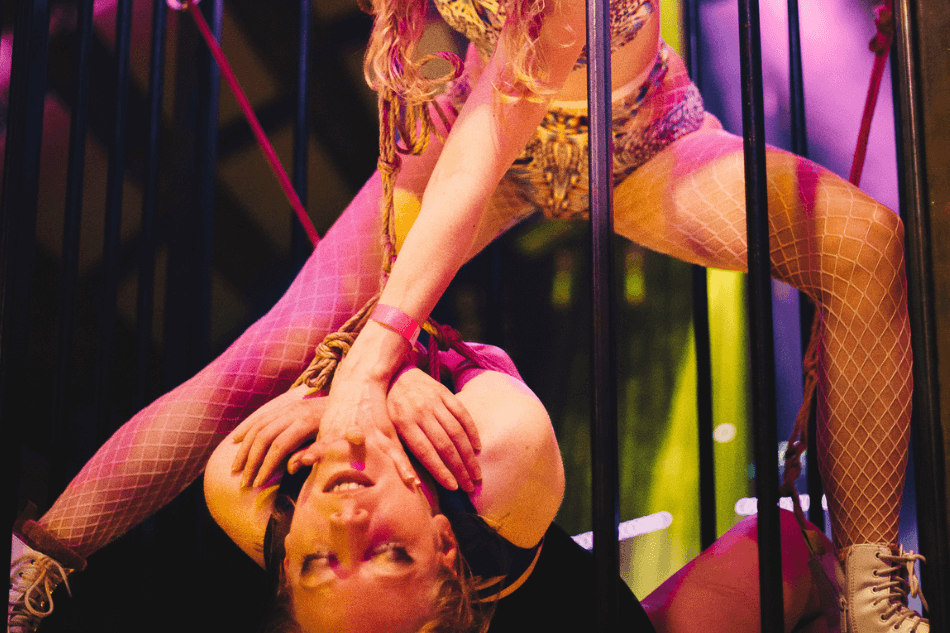
People who don’t seek new practices don’t need to treat sexuality like a catalogue.
It’s enough to be honest within one’s own radius without judging others for choosing differently.
“Don’t look so much at others. Look at yourself,” she says. “Judge neither others nor yourself.”
Sex in Berlin: Podcast, Book, and Looking Beyond the City
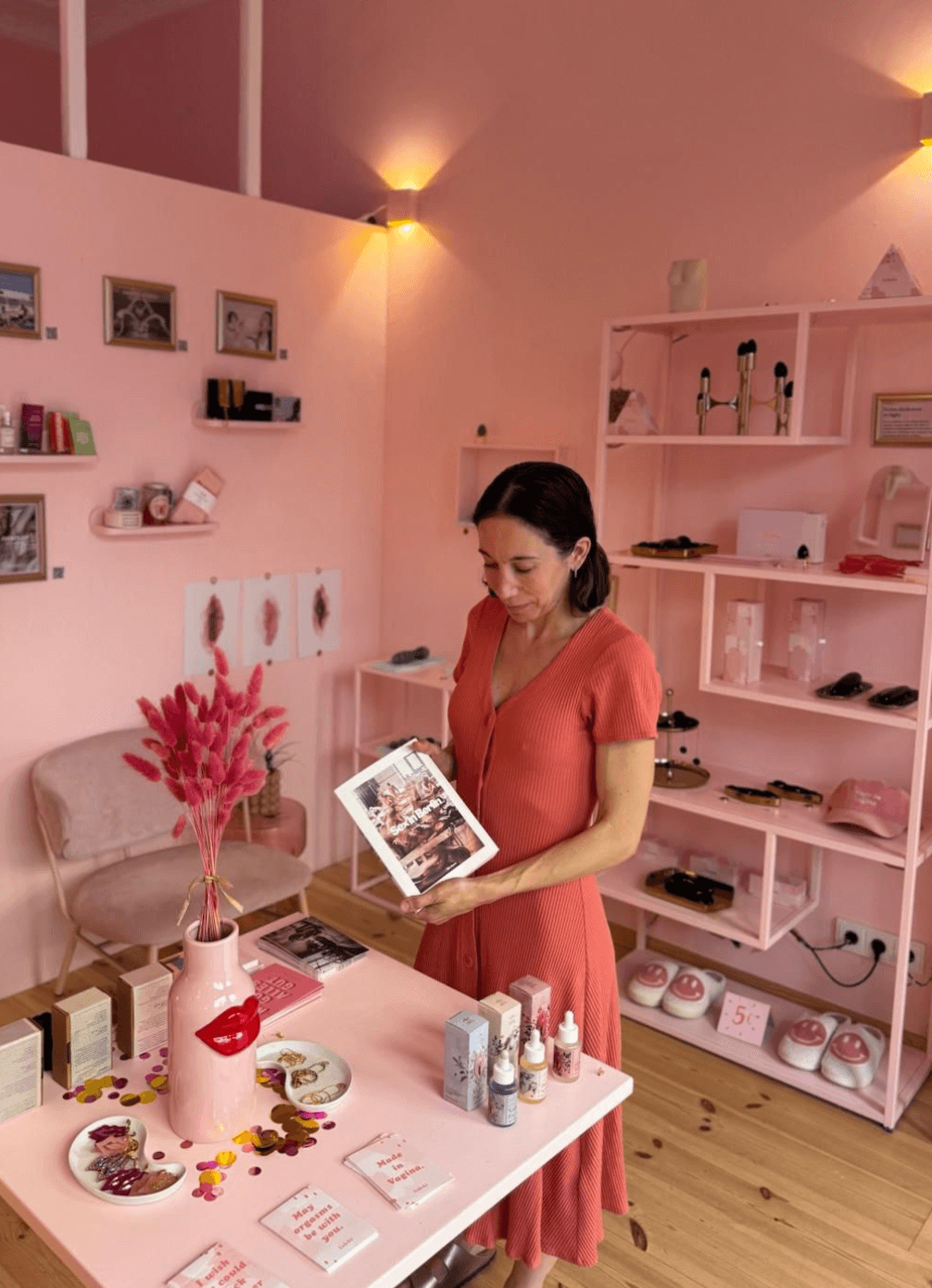
All these encounters led to her project Sex in Berlin.
The podcast has been running for about two years: first in cooperation with Vice, now also in English episodes. Nike portrays people, venues, and formats from the sex-positive world.
She estimates she has conducted nearly a hundred interviews.
“Every two weeks, I talk about a person or a place that has invented something beautiful for how we can live sexuality together.”
A book followed, mapping the German-speaking region, from Kiel and Hamburg to Berlin, Vienna, and Zurich.
The next step is already planned: Sex in Europe, a volume charting key nodes of the scene across the continent.
The podcast is available on all major platforms, and the new book releases in early December, accompanied by a launch party in Berlin.
What Remains: A Very Simple Wish
At the end of the conversation comes a simple question:
What does she hope people take from her work?
Her answer is brief and clear:
“That they are gentle with themselves and with others. That the loving approach is always the foundation.”
It may sound modest next to oil pools, darkrooms, festivals, and workshops.
But perhaps that’s the point:
All these spaces that make Berlin so distinctive matter most to Nike when they lead to something neither exclusive nor dramatic:
People learning to be kinder to themselves and to one another.

Want to read Nike Wessel’s book Sex in…?
Click here: studio36.berlin
You have something to say? We want to read it.
BERLINABLE‘s Open Source Initiative – because the most interesting thoughts often come from unexpected places. Write about sexuality, culture, politics, society. Whatever makes the world more honest, more curious, more real.
Submit content with relevance and professional quality standards. Together, we’re building a platform where voices drive cultural change.
The decision about publications lies with us.
Submit your text: editorial@berlinable.com
Open Source stands for diverse discourse.