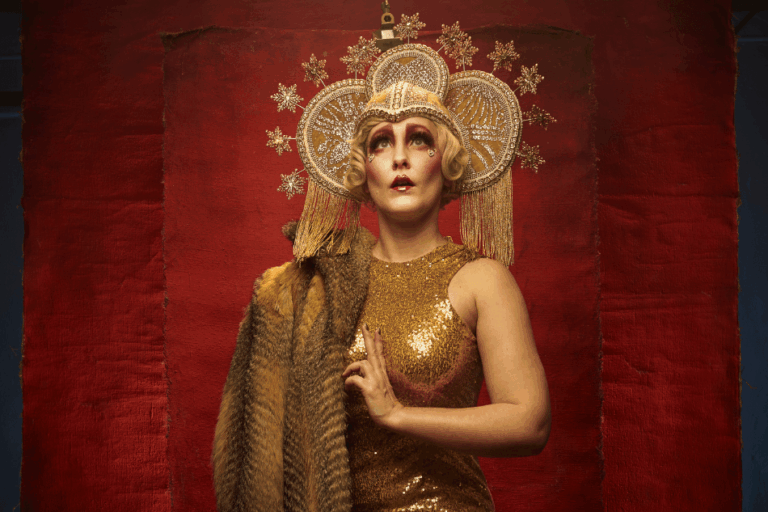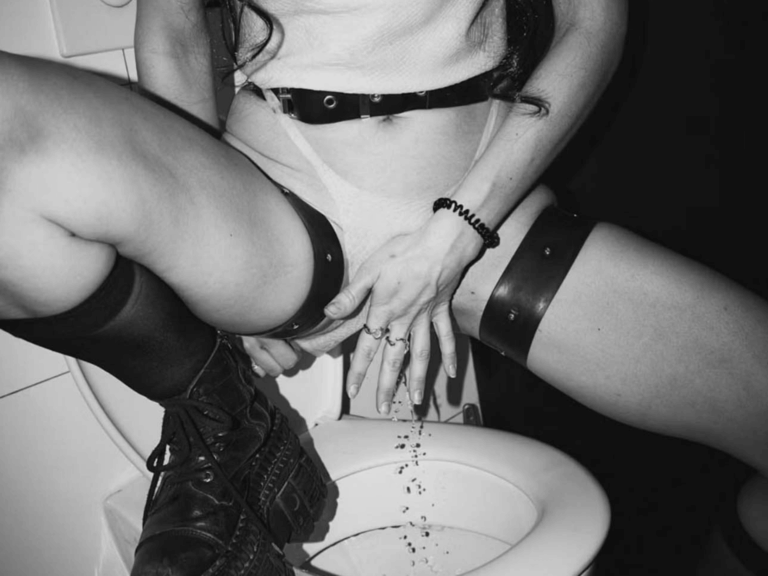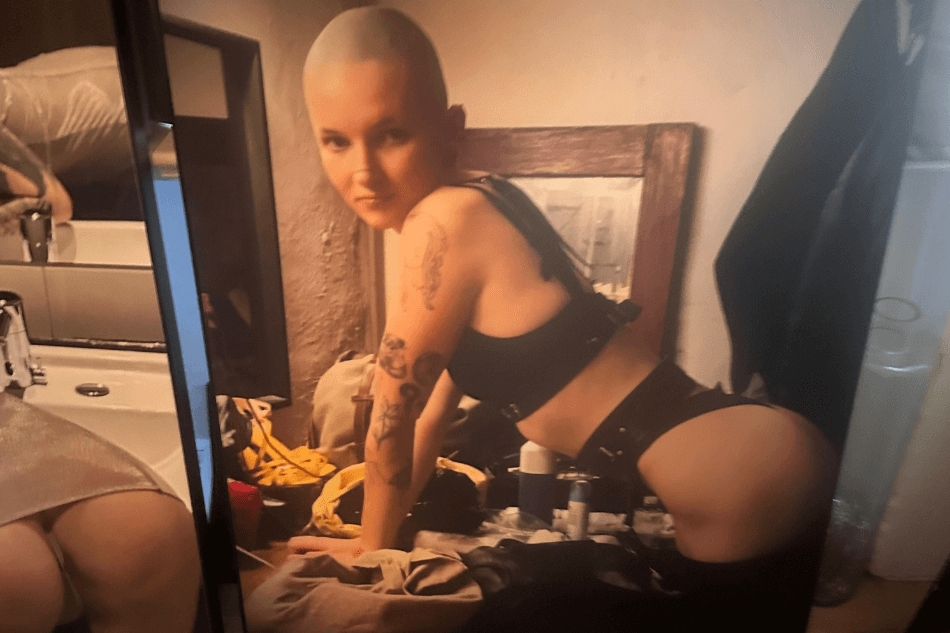
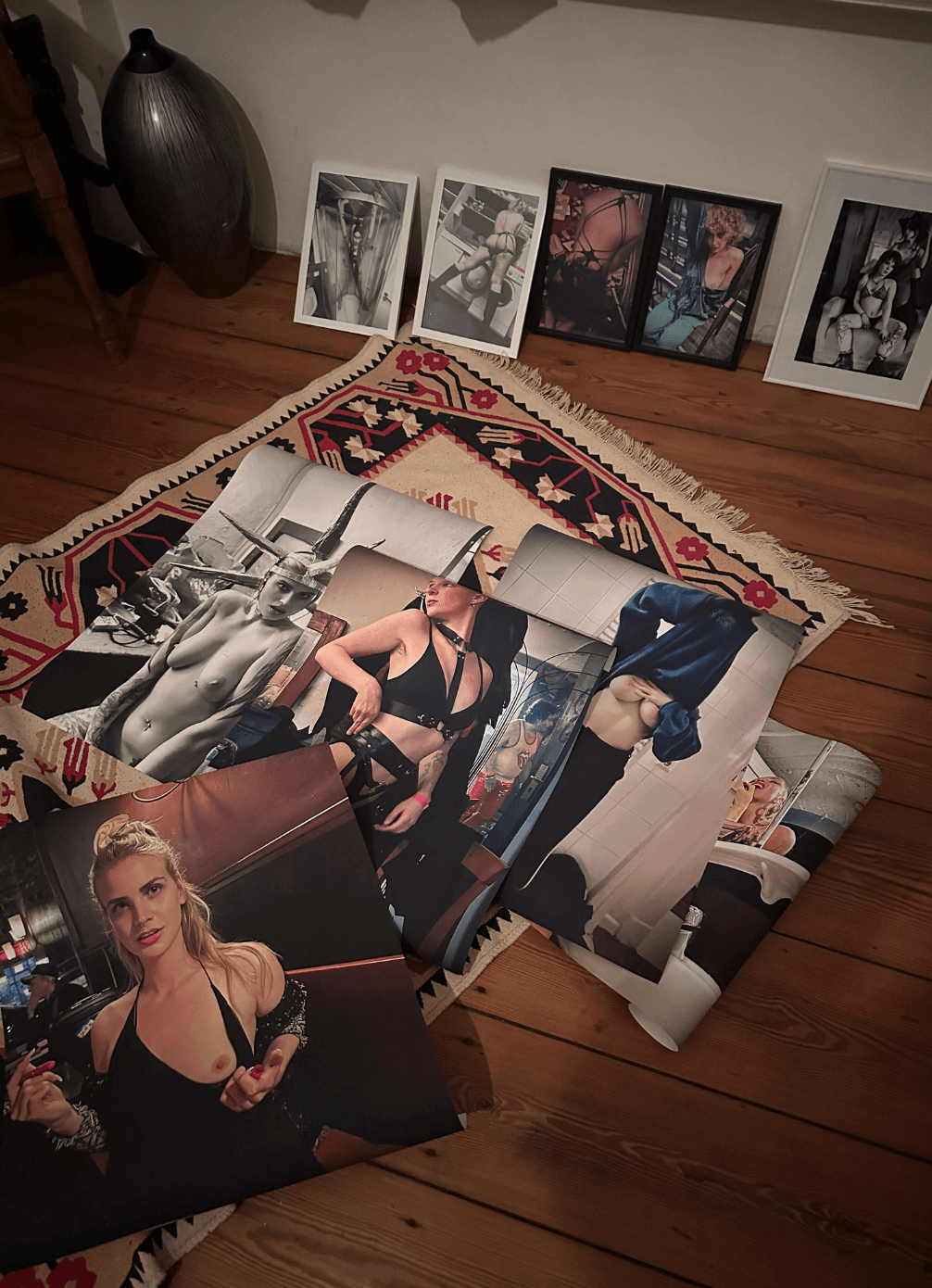
We enter his apartment. The images are not hanging.
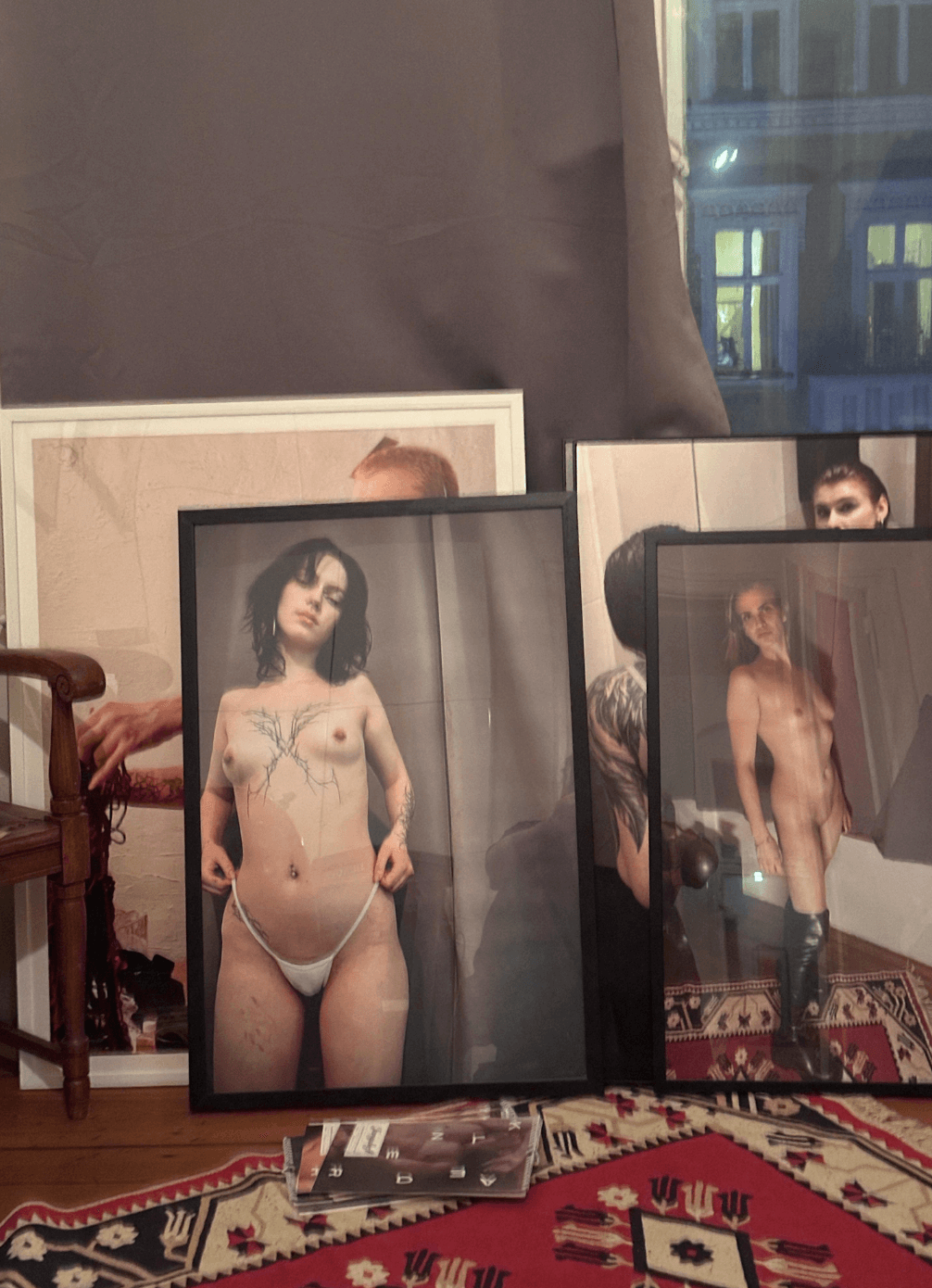
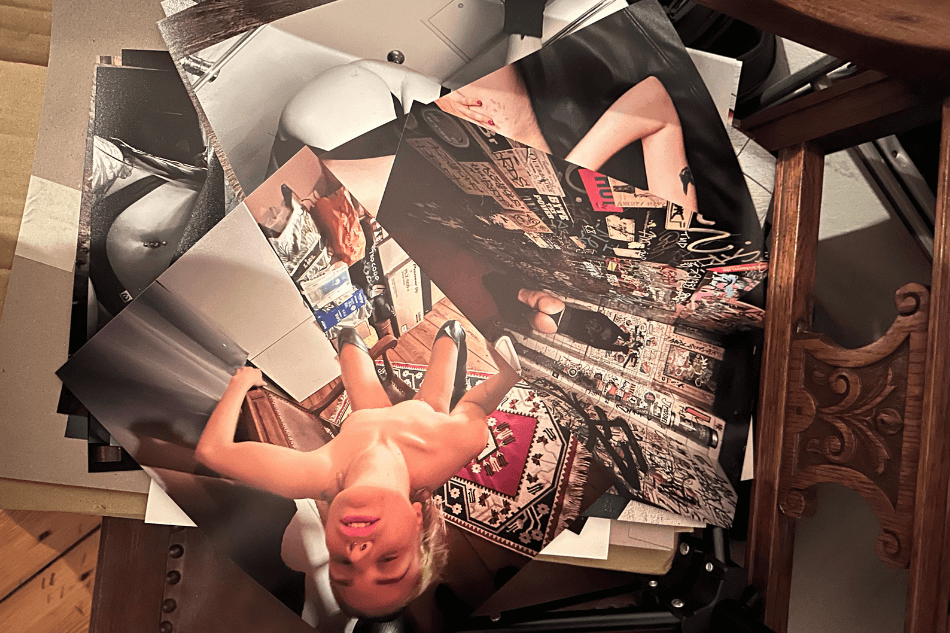
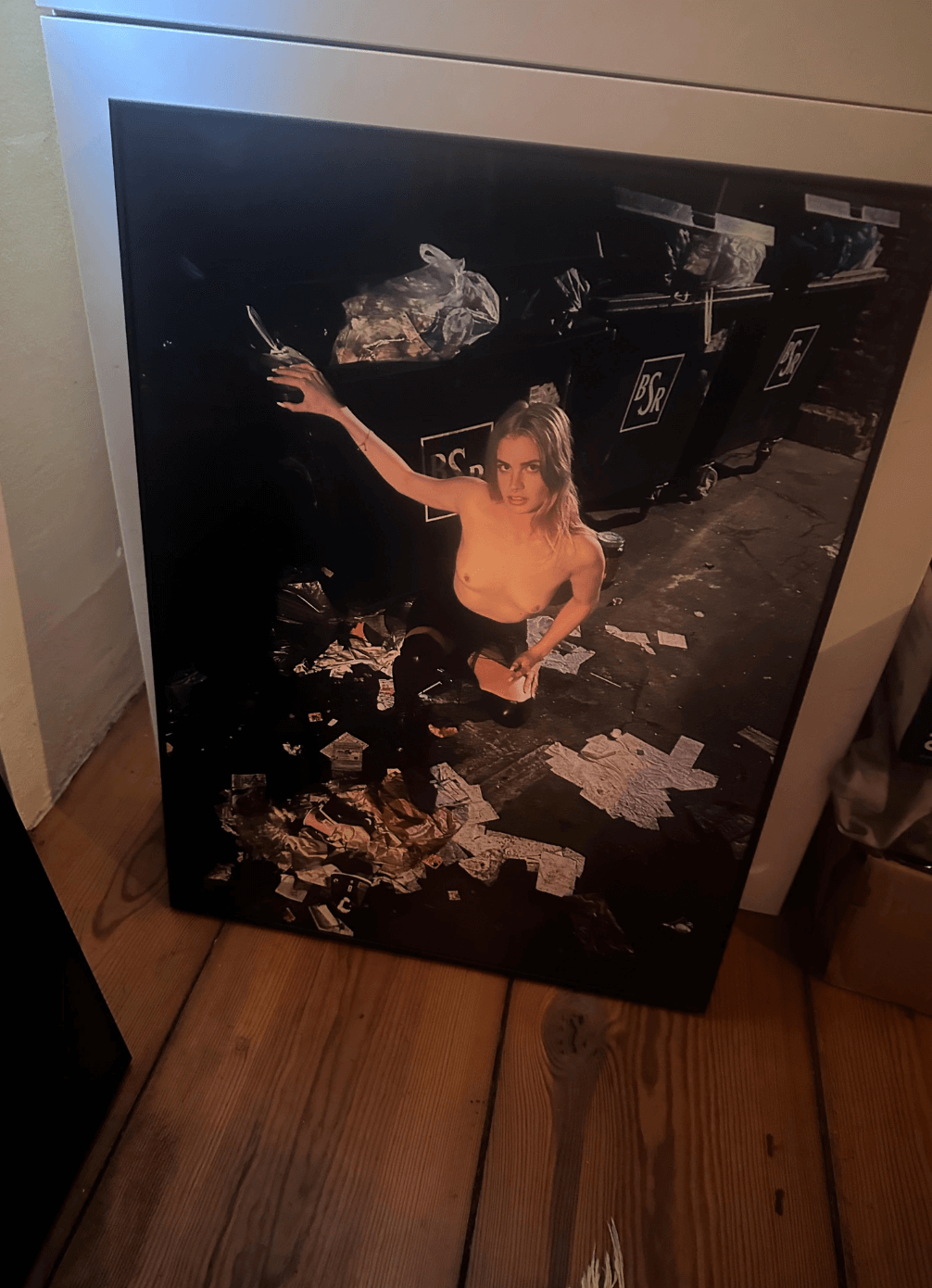
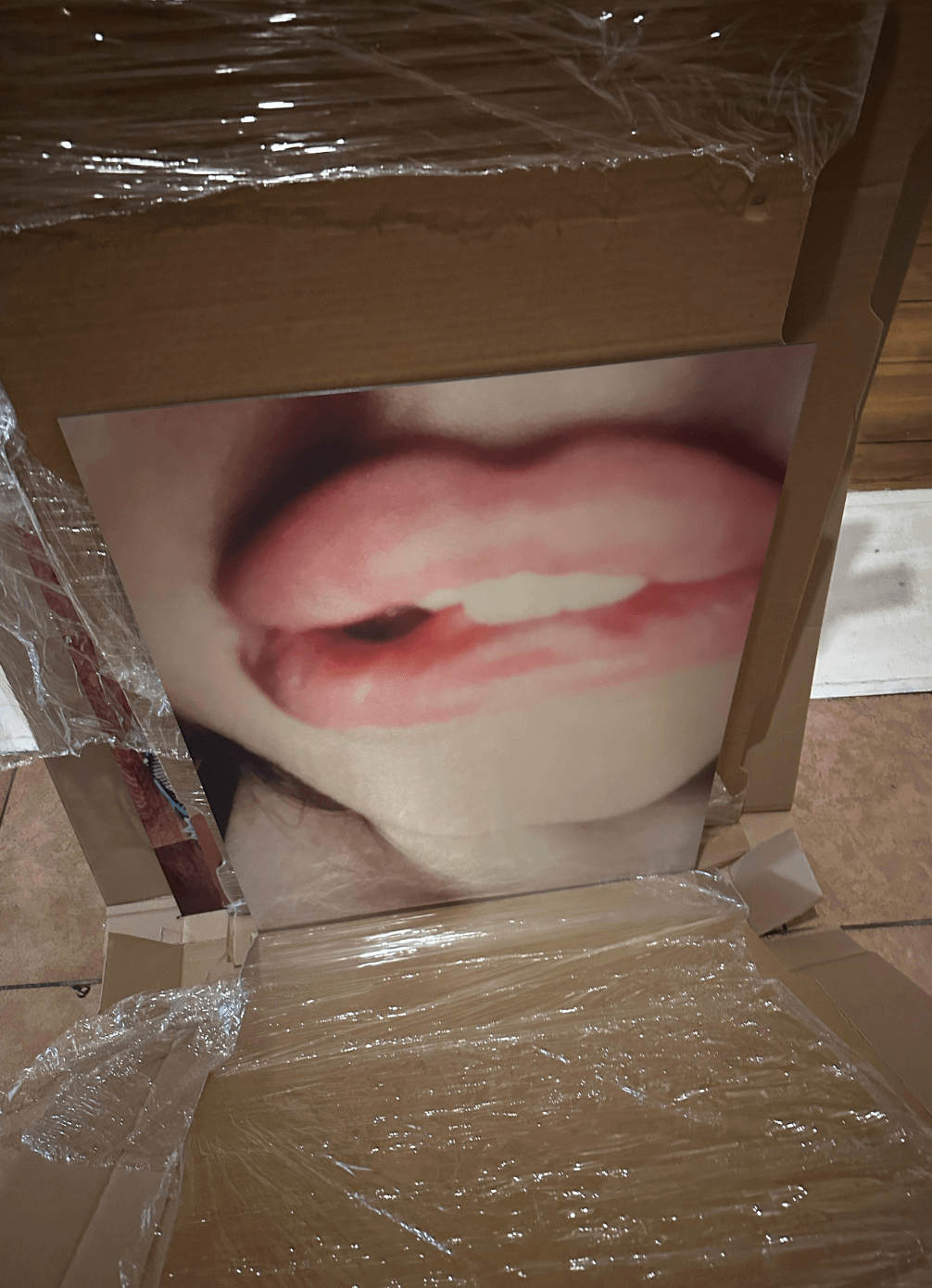
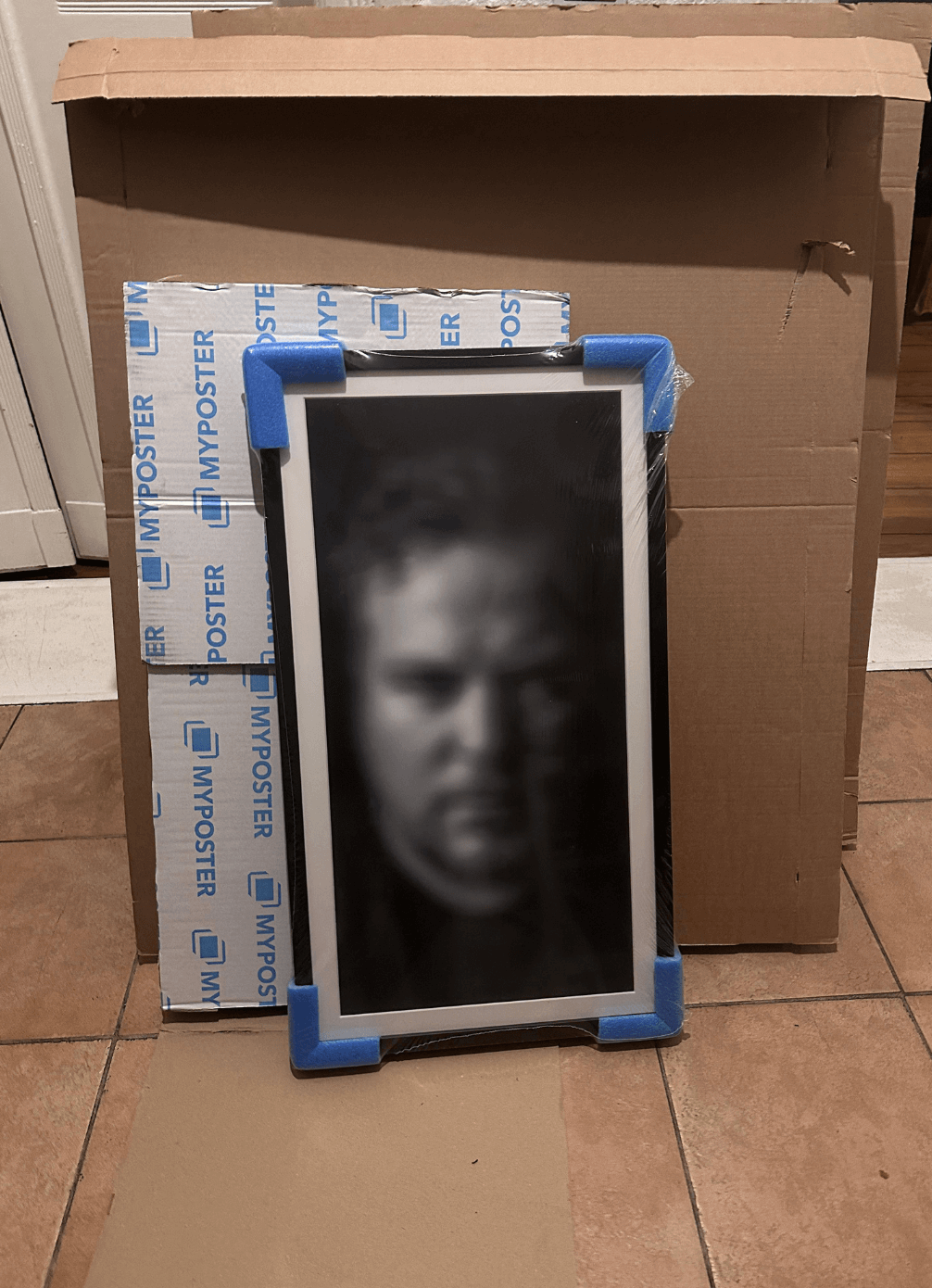
They lean. Lie on the floor. Are stacked against the wall, still wrapped in protective foil. Some half-unpacked, others already wrapped up again. Large-format bodies on paper, spread throughout the room. Wooden floors, rugs, cardboard boxes. A private space where works become visible before they become public.
This is where the conversation with Christopher Steinweg, begins. Not in the gallery but his home. Chris Symbiotikka, as Berlin knows him, invites us in his very private sphere, just before the opening of his new art exhibition “BACKSTAGE” (11.-25. February 2026 at Seven Star Gallery, Gormannstraße, Berlin)
Symbiotikka is one of the most successful long-running, sex-positive club series in Berlin, hosted weekly at the KitKatClub. It is known for its strict consent culture and community-based approach to intimacy rather than spectacle.
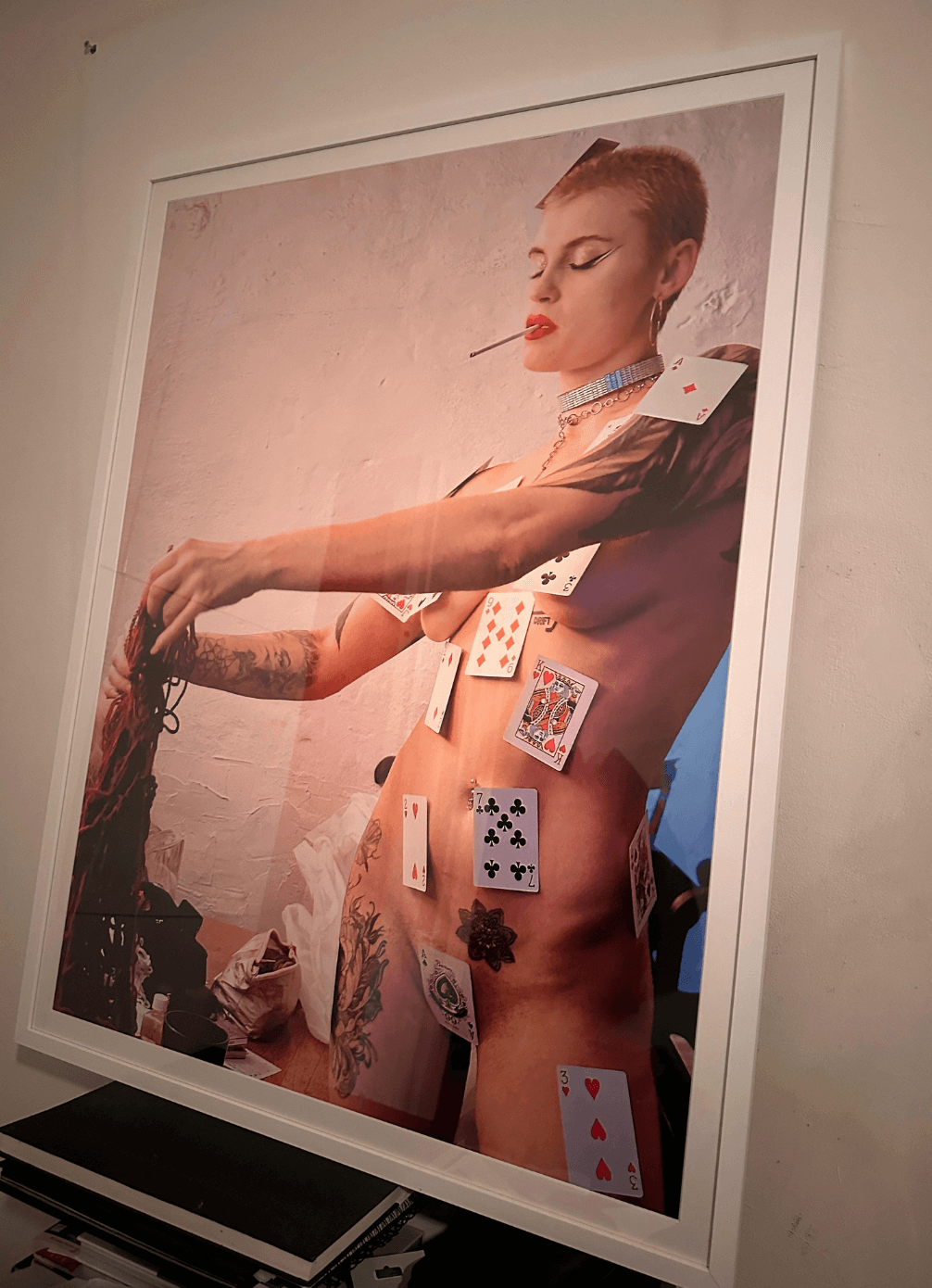
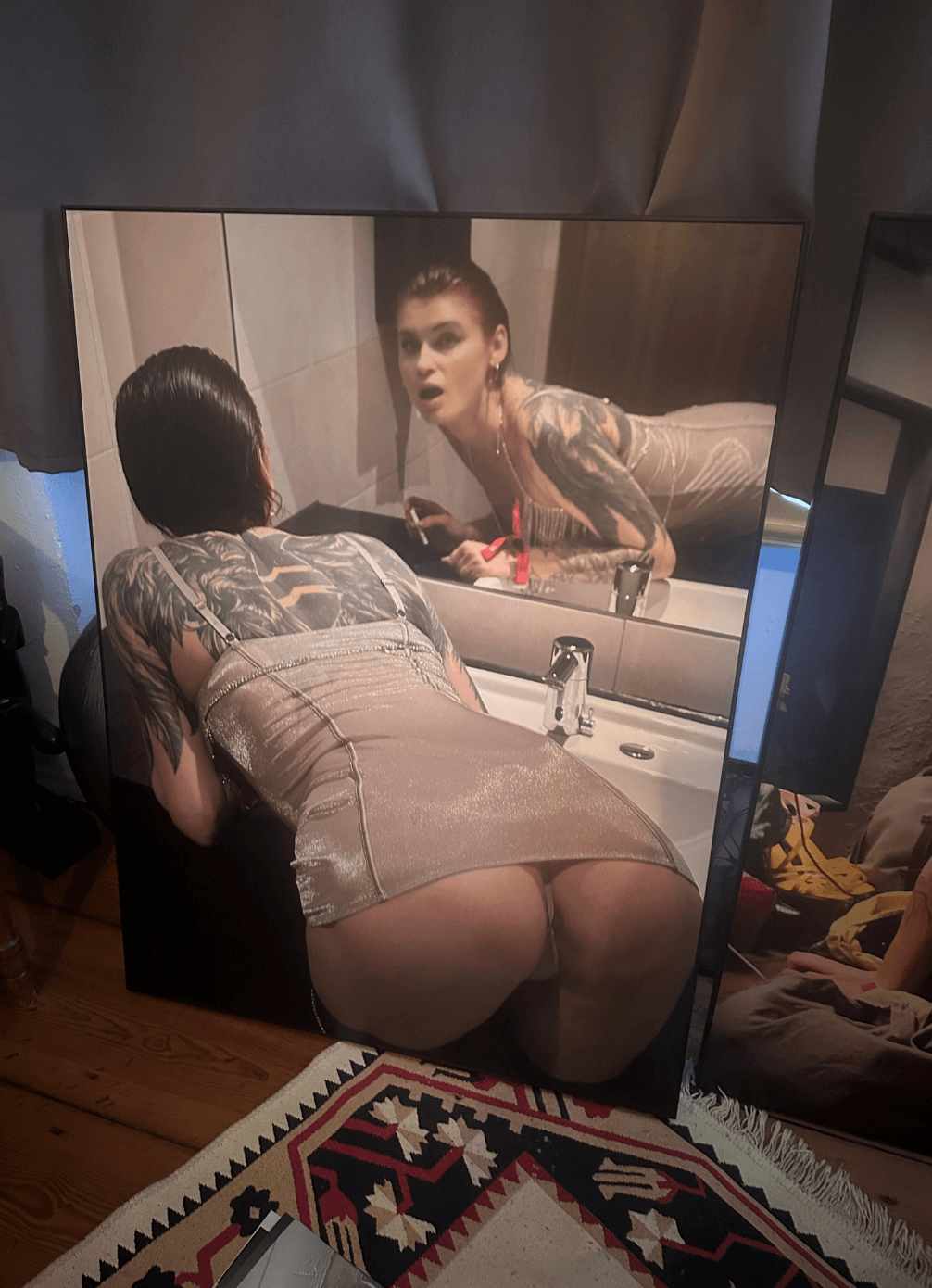
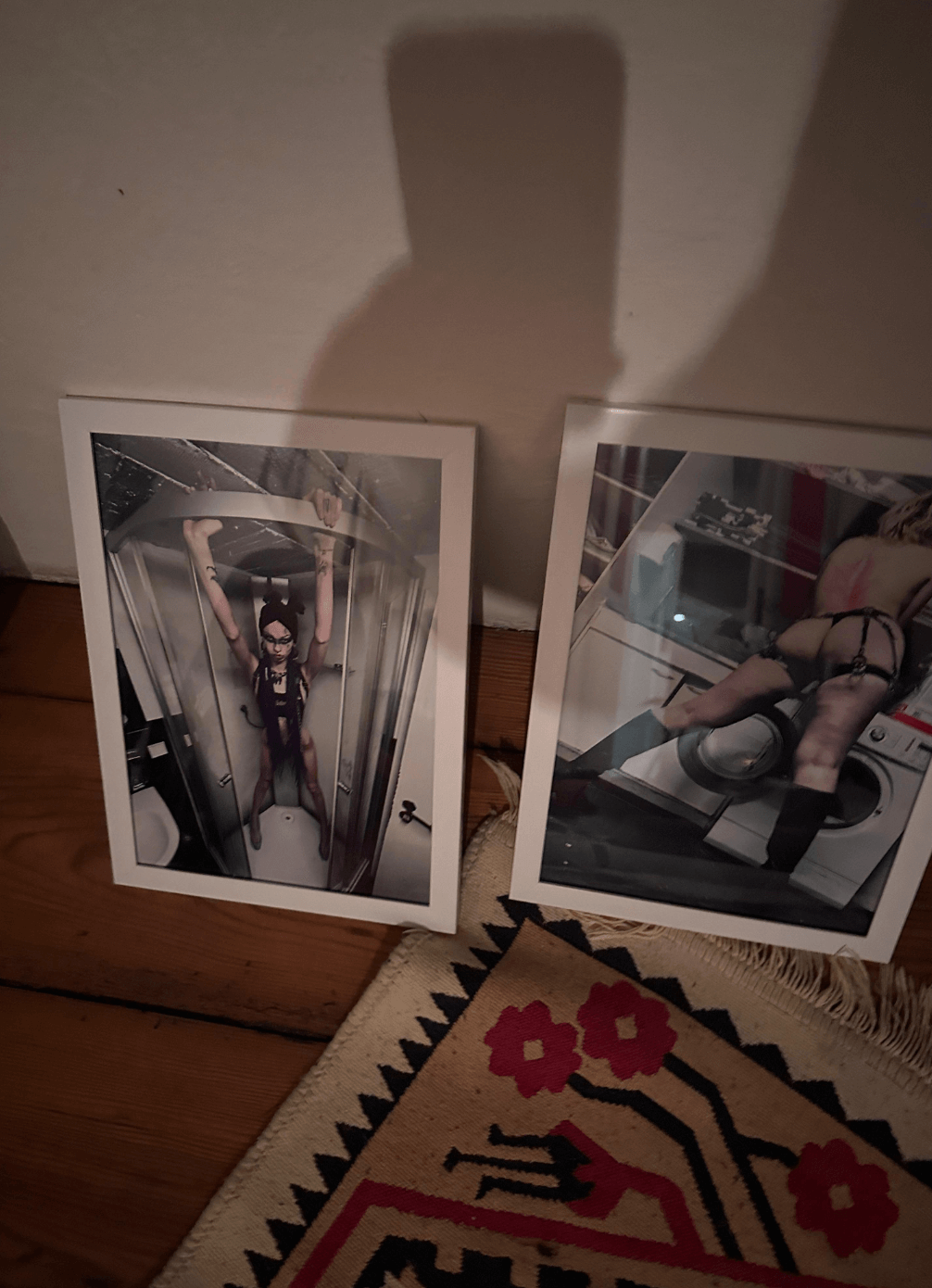
Chris’ photographs show bodies. Nudity. Fragments. Backs, legs, mouths, skin. Some images are sharp, others blurred, almost abstract.
They do not feel staged, but present. Not made for a quick glance, but to be endured.
These are works that do not want to explain themselves, but to remain.
In this private setting, perception shifts automatically. The images make no claims. They do not defend themselves. They are part of a life, not an event. This is precisely what distinguishes them from the logic through which body images usually circulate today: optimized, decontextualized, algorithmically exploitable.
Here, everything is open, but not on display.
Chris does not describe himself as a photographer, but as an artist. Technique, he says, is secondary; the decisive element is the moment.
A perfect photograph interests him less than a truthful one.
Many of the works are created spontaneously, often with a phone, frequently in places where photography is not actually intended. Precisely for this reason, they acquire a different quality: they capture what would otherwise disappear.
It quickly becomes clear in our conversation that these images are not intended as provocation. They are the result of a practice that has developed over years in sex-positive spaces. Spaces that are often misunderstood from the outside. Chris speaks about club culture, workshops, and BDSM contexts as highly regulated social systems. Consent, he says, is not a buzzword there, but a prerequisite. Freedom, in his reading, does not exist without responsibility.
This perspective runs counter to many common assumptions. It becomes particularly evident where power is misread: when devotion is equated with weakness, when male submission is stigmatized, while female BDSM aesthetics pass as fashion. In these double standards, Chris suggests, what appears is less a sexual issue than a societal misunderstanding of control.
His images speak to this without illustrating it. They show no sexual acts. They show closeness, fatigue, self-evidence. Eroticism does not arise here through explicitness, but through context. A clothed body can appear more erotic in this framework than any nudity.
Pornography, Chris Symbiotikka says, does not interest him—it is available everywhere. Presence, however, is not.
Another topic keeps surfacing in the background of the conversation: censorship. Not as outrage, but as observation. Platforms that block minimal hints of skin while violent imagery circulates freely. Rules applied inconsistently, particularly to female and trans bodies. The question of why intimacy is treated as more dangerous than aggression.
Against this backdrop, the decision to show these works in an analog format reads not as nostalgia, but as a deliberate choice. Printed images. Limited time. Real encounters. The exhibition will exist—and then disappear again. Just like the spaces from which the images emerge.
Perhaps it is precisely this moment at home, between cardboard boxes and protective foil, that offers the most honest access to Backstage: not as a finished statement, but as the condensation of a long trajectory. What becomes visible here is not a thesis, but an attitude—one shaped by experience and resistant to quick judgment.
BACKSTAGE by Chris Symbiotikka as a state, not a place
What becomes visible in these images is less a milieu than an attitude. “BACKSTAGE” does not describe an exclusive space behind closed doors, but a state beyond public roles. The photographs capture moments in which people do not have to perform—neither for an audience nor for a camera.
It is precisely this that unsettles. Those who look at these images quickly search for classification: Is this art or intimacy? Documentation or staging? Yet the works evade clear categorization. They are neither anonymous nor explanatory. They refuse rapid consumption.
Art instead of documentation
Chris Symbiotikka rarely speaks about series or concepts. He speaks about moments and situations in which something tips, between closeness and distance, tension and exhaustion. That many of the works are technically imperfect is not a flaw but part of the decision.
The aim is not to prove or depict something, but to make a state perceptible. A perfect image would be more likely to destroy that state than preserve it. Blur, grain, fragmentation open up a space in which viewers are required to linger.
Eroticism without pornography
Eroticism does not arise here through explicit action, but through context and the way a body occupies space, how a gaze is held, how closeness is allowed or withheld.
Pornography, Chris says, is available at any time. It functions through clear codes and repetition. His work is interested in the opposite: in ambiguity.
In moments where desire is not immediately resolved, but allowed to persist.
A clothed body can be more erotic in this context than any nudity. Eroticism is not shown here—it is permitted.
Chris Symbiotikka sees consent as social practice
What connects many of these images is a quiet knowledge of boundaries. Nothing appears accidental, but nothing feels intrusive either. This has less to do with morality than with practice.
In sex-positive spaces, as Chris describes them, communication is not understood as a mood killer, but as a prerequisite. Consent is not a one-time act, but a process. This attitude shapes not only intimate situations, but social relationships more broadly.
This is precisely why these spaces often appear paradoxical from the outside: explicit, yet structured. Open, yet regulated. Freedom does not manifest as loss of control, but as a conscious decision.
Power and its misunderstandings
A recurring theme in our conversation with Chris is the societal misunderstanding of power. Irritation arises particularly where roles do not conform to familiar expectations.
When devotion is automatically equated with weakness, or male submission read as a threat, this reveals less about intimate practices than about cultural ideas of strength.
The images themselves do not comment on this. They simply show people in moments where these projections briefly fall away.
Censorship as symptom
In contrast to this conscious engagement with closeness stands the way digital platforms deal with bodies. Chris describes a striking shift: while violent imagery is often tolerated, even the slightest suggestion of skin is enough to trigger removal.
This inconsistency does not appear accidental. It points to a societal prioritization in which aggression is perceived as less disturbing than intimacy.
Sexuality is not read as human experience, but as risk.
That Backstage is deliberately shown in an analog format is, in this context, a clear statement. Printed images resist algorithmic logic. They demand time, presence, and engagement.
Berlin and the shrinking space
Berlin was long a place where such in-between spaces were possible. But conditions here, too, are changing. Free spaces are becoming narrower, interpretations harsher, uncertainties greater.
Backstage can also be read as a response to this shift—not as a nostalgic invocation of the past, but as a quiet insistence on an attitude that has ceased to be self-evident.
Freedom and responsibility
Chris makes a clear distinction between freedom and arbitrariness. Freedom, as the attitude behind these works suggests, demands responsibility toward oneself and others.
This responsibility is not imposed, but negotiated. That is precisely where its political dimension lies. Not loud, not demonstrative, but effective.
Backstage by Chris Symbiotikka as condensation
For the exhibition at Seven Star Gallery, the images leave their private space. They become public without denying their origin.
Backstage is neither an overview nor a manifesto. It is a condensation. An attempt to make something visible before it disappears. Not to persuade, but to be perceived.
Chris Symbiotikka – “Backstage”
- Seven Star Gallery, Berlin-Mitte (Gormannstraße)
- 11.-25. February 2026
- Accompanying program: opening, two artist dinners, closing event
A note on language:
Throughout this article, we use the term “sex positive” as a shorthand to describe spaces and practices that approach sexuality with openness, consent, and responsibility.
Within the communities themselves, the term is increasingly questioned—seen as too broad, too normative, or too closely tied to consumption rather than lived experience.
We use it here not as a definitive label, but as a point of entry—a simplification that allows broader audiences to approach a more complex reality.