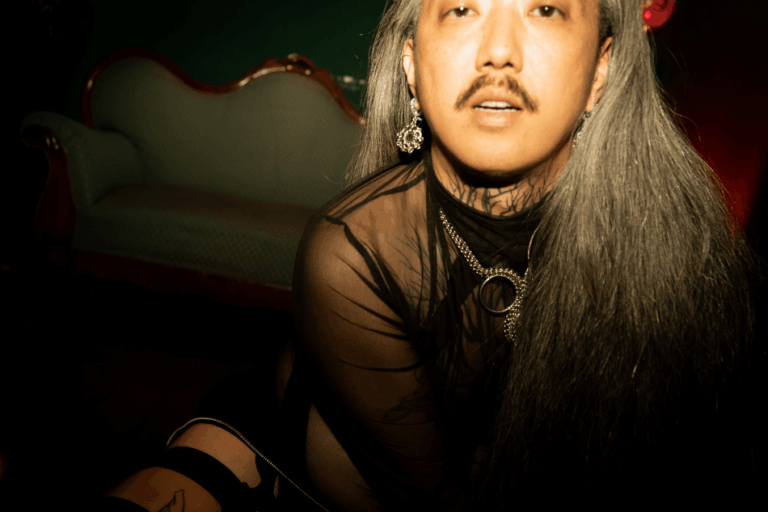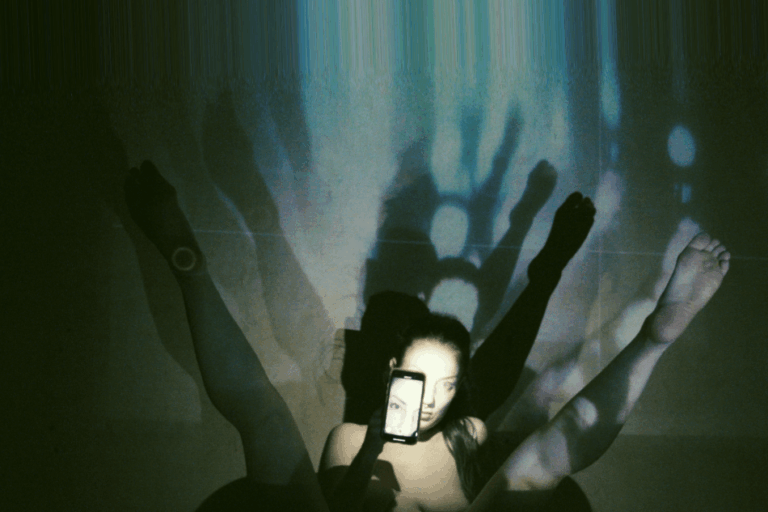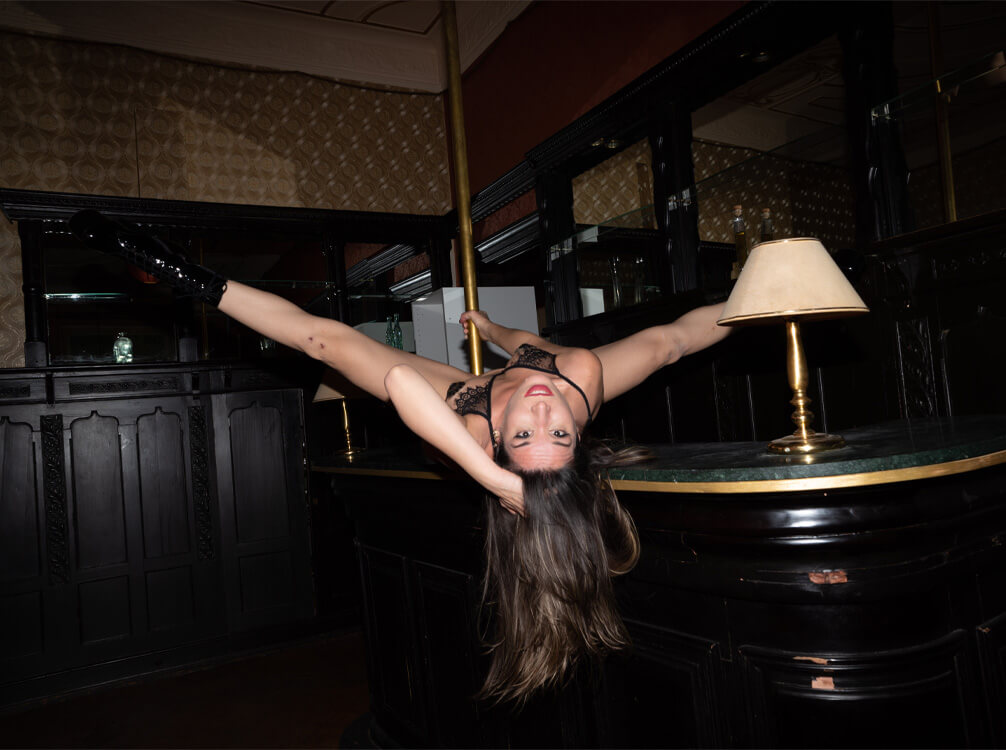
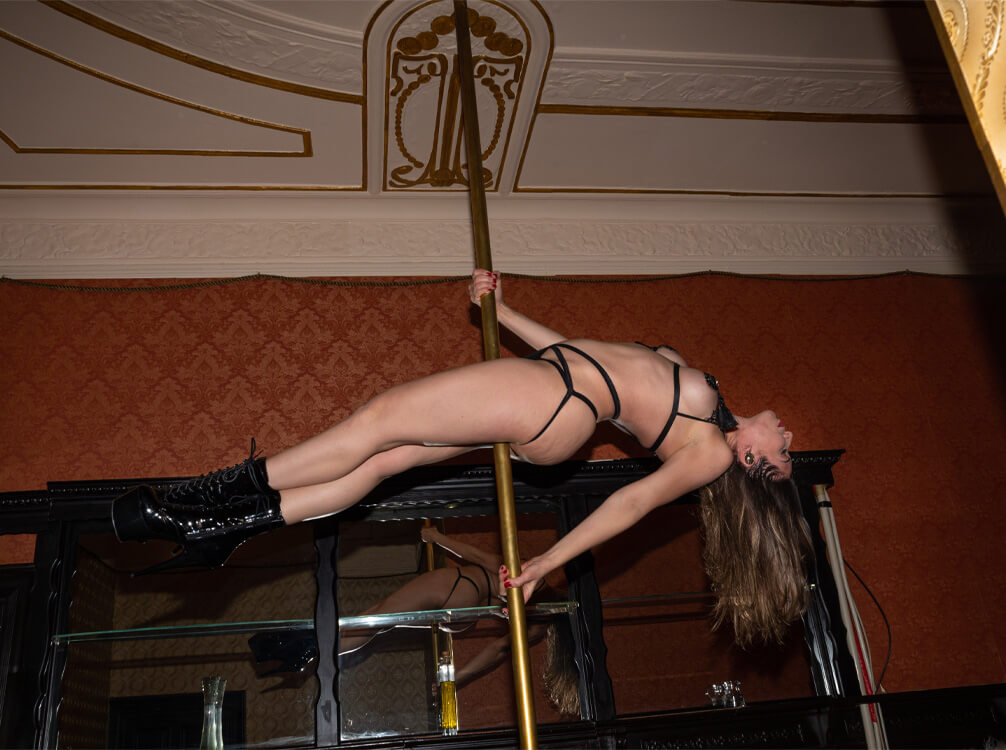
Glitter, fake eyelashes, and buttcheeks spread on the pole – Chiqui Love is born to entertain and to make money off of it.
With a laugh so loud that it could echo through the whole city of Berlin, Chiqui Love steps into the BERLINABLE office and lights up the room in a second.
After a couple glasses of wine, and an intense conversation about the patriarchy and the life of a sex worker, one thing is clear: Chiqui Love does not put up with your bullshit.
But see for yourself.
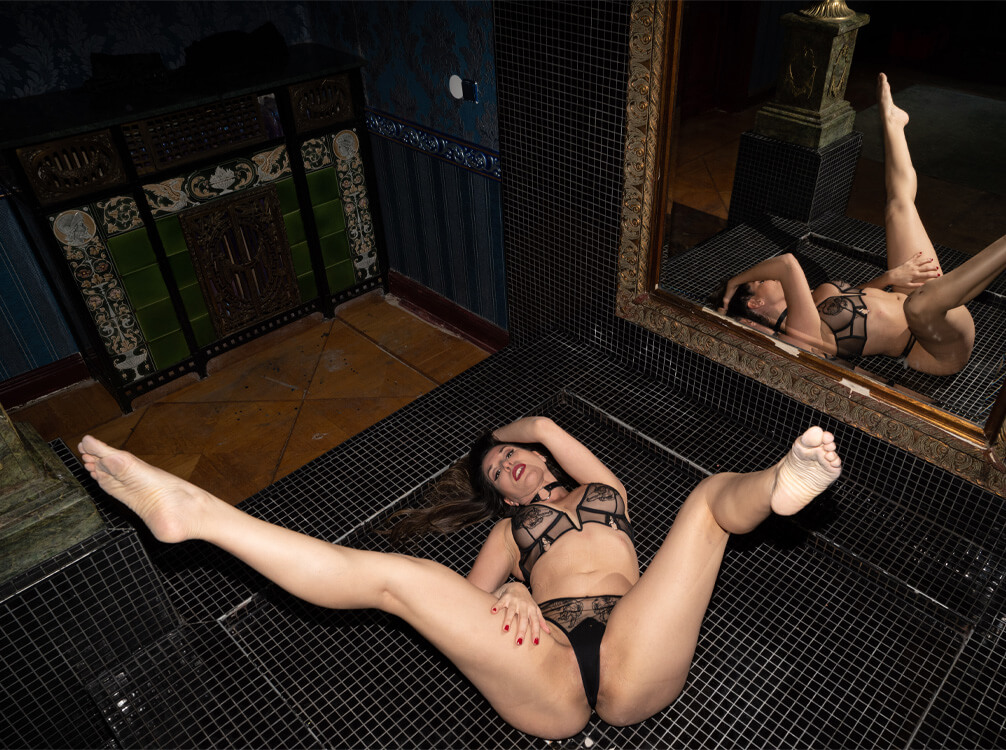
BERLINABLE: Chiqui Love, you’re not only teaching dance, but you are also a founding member of the stripper collective Berlin and a dancer on stage.
When was the first time you encountered burlesque and dancing and how did you fall in love with performing?
Chiqui Love: I co-founded 2 strippers collectives: 1 in London and 1 in Berlin.
In London, we started back in 2013/14 with East London Strippers Collective to honor the place were we all met and everything began, The White Horse pub, but the area also features other striptease establishments. However, they’re slowly but surely disappearing due to gentrification and changes in legislation that heavily seeks to control any sort of adult entertainment.
When we started, it was a small group of us, eager to tell our own stories and produce spicy entertainment that was centered on the workers themselves, with Stacey Clare being one of the main people pushing us to start our own events. This includes the Life Drawing session featuring stripers as models, and it used to be hosted every Monday at the place worked.
She also published an incredible book about Striptease and all the legislation and intricacies of the industry that I highly recommend called “The Ethical Stripper”.
The Collective still is active and still successfully host the Life Drawing sessions every Monday. The one in Berlin recently changed its name to Slvt Riot, but I am no longer involved with that. However, I am happy that events that I brought to Berlin such as Stripper Stories is still thriving and giving Sex Workers the opportunity to share their own stories in a society that tends to ignore us and silence us.

Chiqui Love: You want to call it a striptease, you want to call it burlesque – to me, it’s the same thing.
It’s just that one is more socially accepted.
And the other one is more underground.
But when we think about the burlesque artist back in 2040, and 2050, they were the naughty women back then.
Dita Von Teese, for example.
She also started in a strip club.
And she always says: “You can call me a stripper; you can call me a performer.
I don’t care.”
I’m the same.
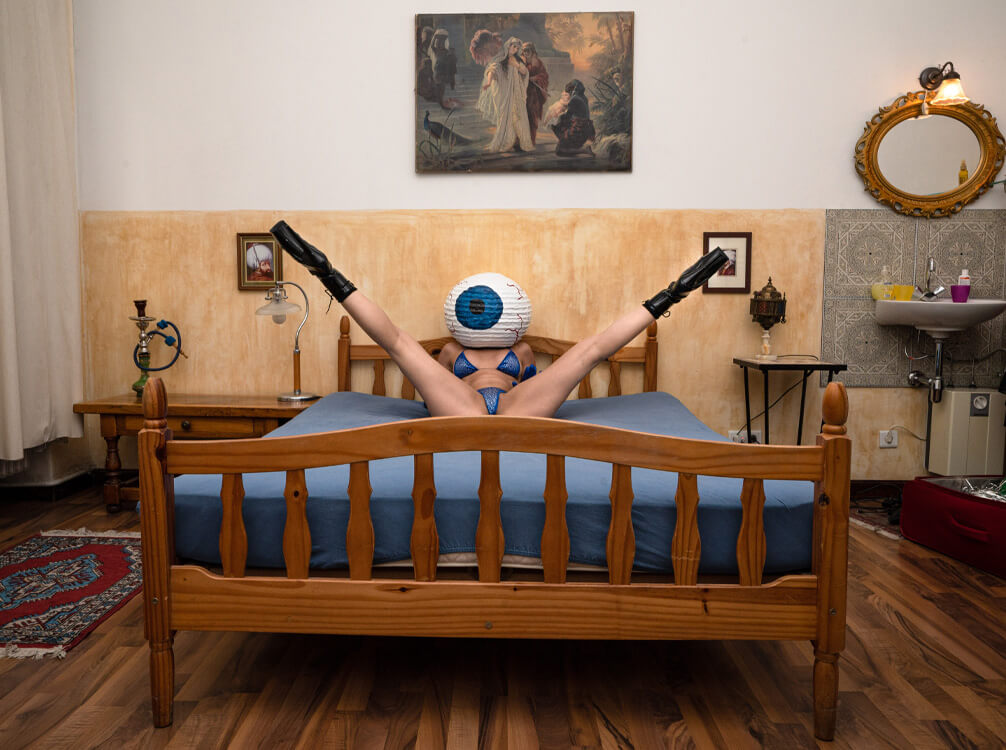
I think I get different things from different types of dancing though.
I like the rawness of a strip club, the sexual energy right in your face.
And I make more money when I do the raunchy things because men have more money, they have more disposable income, and they have more free time to go and get entertained.
Women can’t really afford to go to strip clubs and spend €100 for 10 minutes.
Not the majority at least.
So, are you saying that stripping is for men and burlesque is for women?
Chiqui Love: I’m not putting gender into it.
But because of how the world is structured financially, men make more money than women, and women do a lot of the free labor like cleaning, and taking care of the children, so men have more free time.
By logic, men can afford to go see a stripper.
Especially considering how these clubs are run.
Most are run by men, meaning they’re not that welcoming to women or gender-diverse people.
Many women love the art of striptease.
They love watching a pole dancer.
They love the outfits, the vibes.
However, it really depends on the country, when I worked in Australia, it was really inviting for everyone.
It was common to see a big group of women coming in and tipping the dancers and having a great time.
Germany, for example, seems to be a very open country, but I don’t think it really is.
Why?
Chiqui Love: I think there is a lot of misogyny disguised as equality and rights.
I had many guys here be really rude. Like extremely rude.
The UK is almost the same, the clubs are run by very misogynist men, but the UK is pretty capitalist. You need to make money, so they help you make money.
Berlin is different.
It’s cheaper, so they don’t really care about you making money.
They also let anybody in, you can see a guy sitting at the bar with a bottle of beer for 3 hours not tipping and that’s completely fine.
In the UK that could never happen.
If you’re not consuming, you’re not spending money, you need to get out.
In the UK, it’s clear that a transaction is about to happen.
Berliners can get into KitKat for 10$ and see and have sex there.
Sex is easily accessible here.
What types of people come to the clubs here?
Chiqui Love: Mostly tourists.
I was very happy because a lot of them used to come here for their bachelor’s party, and they would spend money.
A lot of guys come from the U.K. because for them, Berlin is cheaper.
But then when the pandemic happened, you were left with some of the locals.
And that was a bit tough because you still have 30 dancers on the stage,
but not enough customers.
I prefer tourists for sure, especially if they are from Norway or something like that.
I also don’t do too good with Germans, they are usually into very young-looking, skinny girls.
I’m too feisty for them, I guess.
How did the scene change in the past 20 years?
And not only the stripping and burlesque scene but also how society views them.
Chiqui Love: For us, it’s become worse financially because back in the nineties or early 2000, there was a lot more money around and the economy worldwide was better.
Then you have the Internet where you can watch porn for free all the time.
Also, the clubs.
Most of the owners only care about making money.
We are walking cash points for these people.
They don’t care about the dancers or the customers, they don’t decorate the club, so the customers don’t come back. And it’s not welcoming to everyone, so you are limited to male customers.
Then it’s a very competitive job. There used to be 10 dancers in a club, now it’s 40.
Also, something that Stacey talks about in her book: legislation.
Not only the venues started to make money, but the government also started to make money off the venues by taxing them.
Many clubs went bankrupt which left us with fewer clubs and more dancers.
Chiqui Love: Sex work is a double-edged sword.
It’s legal here in Germany, but you must register as a sex worker.
Many don’t want to do that.
So, the business has become worse, but in terms of how society perceives us, it got better.
I remember questions I got back in the day.
“Are your customers terrible?” for example.
They always assumed the worst.
I once had an interview, talking for 45 minutes about how I like my work, and how I am a terrible waitress, but a wonderful stripper.
And they asked me all these questions, assuming that I come from a broken family, that I am a drug addict and had no choices in life.
And I jokingly said: “No, I love my mom and I am not a heroin addict”
So, after talking about all the good stuff that’s what they published.
The headline went: “Chiqui Love loves her mom and is not a heroin addict.”
But nowadays, the interviews, like this one right here, have changed.
People see me as a complex human being, not as a victim.
It’s interesting, they either want you to be empowered or they want you to be a victim.
But hey, I am not empowered by any work.
I am empowered by the fact that I am paying my bills and that I can eat!
What awaits us when coming to one of your shows?
Chiqui Love: I still do stand up, and perform at Tipsy Bear: a queer bar with lots of inclusive and sexy shows.
As a Burlesque/Dance teacher, can you observe a certain growth in your students? Do they change while learning how to dance?
Chiqui Love: I think we are who we are. But I think we all have different aspects of our personalities.
One of the beautiful things about being a teacher is how you make people feel comfortable enough that they’re not embarrassed or ashamed to be sexy, to be themselves, and also not to be ashamed of their bodies.
I feel like from a very young age, especially for women, we are told that our bodies are not beautiful enough, that we’re getting too old.
And that I’m trying to un-program. It’s about unfucking yourself.
The first thing I tell my students is:
“Nothing is wrong with your body. Nothing is wrong with your age. And nothing is wrong with how you dress.”
Just come here and have fun for the 2 hours were together, dance, laugh, make mistakes, but most of all have a good time.
Like previously, we prepared choreography for a summer show, and we were fruits. Juicy fruits.
I loved watching them smile and have a good time. And they became friends with each other.
We need more of this in spaces where we can just be, you know, without shame.
And it’s hard enough, society doesn’t want women to be happy because they would be losing money. Capitalism makes money off our body insecurities.
Obviously, strippers are normally really hot, right? That’s what you’re selling.

But many girls have self-esteem issues, because of physical appearance or their personality.
Usually, the women coming to me have normal jobs, but I also have dancer friends asking me to check their show, asking me where exactly to place their hands or to what beat-drop they should take their bra off.
Why is burlesque loved by women?
Chiqui Love: I think women love adult entertainment, not just burlesque, but also stripping or porn.
But the cool thing about burlesque is that it has been very welcoming to different body shapes.
As I said, strip clubs are run by men, so you usually see certain women with a certain body type there.
However, in burlesque you have women who are older, you have women who are a bit bigger. It’s very welcoming and people feel represented as you see women of different body types, races, and ages
And it’s very playful. It can be super sexy, but also super funny.
It can have a real storyline, going to a Burlesque show you never know what you are gonna get.
I once did a show dressed up as Melania Trump and was like: “I make America great again, I am immigrant, but good kind of immigrant, because I look like supermodel.”
And I had Donald Trump’s head in my hand and used to squeeze it until all the blood in it flowed onto the American flag.
So, it can even be political or artistic.
Chiqui Love: Strippers are artists.
I remember this Italian girl back in the day, Silvia.
She used to do crazy tricks on stage.
And Silvia never used the pole, she used to look at every man in the crowd and touch herself very slowly.

She was like: “Look at me!” She didn’t do anything else.
It’s an energy thing. And that’s something that you cannot copy.
And personally, in the whole industry, it’s not always the most beautiful one, but the one who has the most energy.
What’s the connection between burlesque and sex/sexuality?
Chiqui Love: Apparently, traveling circuses brought in burlesque performers back in the day.
Because at some point, the crowds were not that exciting about the shows anymore.
So, what do you do to get the people excited?
You bring in some beautiful ladies!
They had a pole in the middle of the circus tent.
Back then, they dressed much more conservatively and showed very little compared to now.
But the circus started to make money again.
Women have been enticing to men forever. Just think of Eve – if we go back to biblical times.
It’s the same thing, just packaged in a different way.
Working with women living in Berlin who are originally from another place. How does Berlin influence one?
Chiqui Love: After living in London for so long with its exorbitant prices and very competitive nature, Berlin gave me another opportunity to keep on being a performer and a sexy industry worker and explorer. It feels more welcoming to different ways to express oneself and less saturated.
Why do you think our society keeps suppressing everything related to the human body – nakedness, sex, and gender?
And why is it important to fight against this oppression?
Chiqui Love: Oh, I think this oppression comes from religion.
I really think that Christianity fucked us all.
Especially when it comes to female sexuality, you are either a whore or a virgin.
And then it’s a control thing. Controlling women’s bodies is all around us.
Like what’s going on in the US right now with abortion.
Which year are we in?
Are we really still in 2025 telling women they can only have an abortion if someone raped them or if it was incest? What about our freedom?
Like I had an abortion myself and I wasn’t very poor. I was just too young, and I was not ready to be a mother.
And using the argument that the only reason for an abortion is that something really violent has had to happen to you in order for you to access your basic human rights.
I think that’s just wrong.
But again, fear is just a matter of controlling people in our society.
And who is the weakest link? Women are, right?
So, we still earn less.
They still tell us what to do with our bodies.
They still blame us.
Chiqui Love: Especially when you are in the sex industry.
They never listen to us.
I don’t know one person who has never watched porn, but nobody wants to admit it publicly.
Sex stays a taboo subject.
If something bad would happen to me and they find out that I am a stripper, they will only see that.
But to be honest, in my work, I feel like I have much more power and consent than I do in my normal life.
People have touched me without my consent in many clubs and on the streets.
But at work, I can go to any guy, and let him know if you want to touch it’s going to cost you this amount for this many minutes.
And if they do it without consent, I call security and kick the guy out.
Sex work has taught me more about boundaries than any other thing.
Now when I go through my day-to-day life and I date guys, I come with very strong boundaries, because I’m like “Babes, I’m spending time for free with you.”
Subscribe to Sex & Society – weekly insights on culture, politics, and desire, plus exclusive access to BERLINABLE’s curated stories.
Your sex life will thank you.