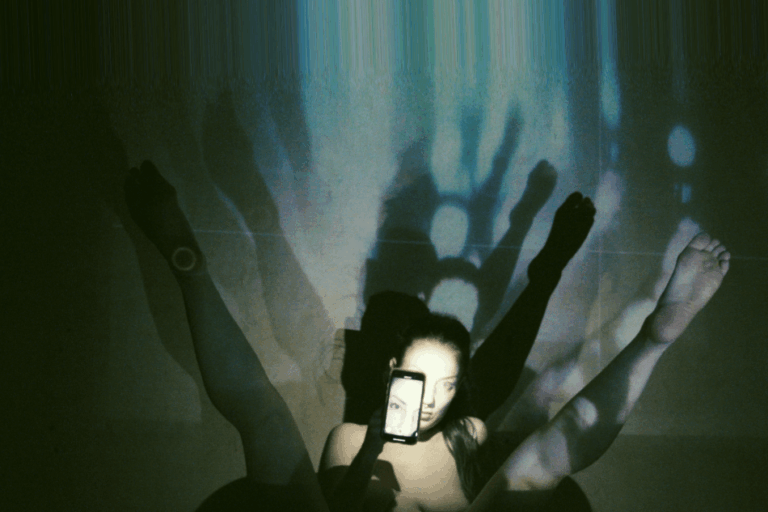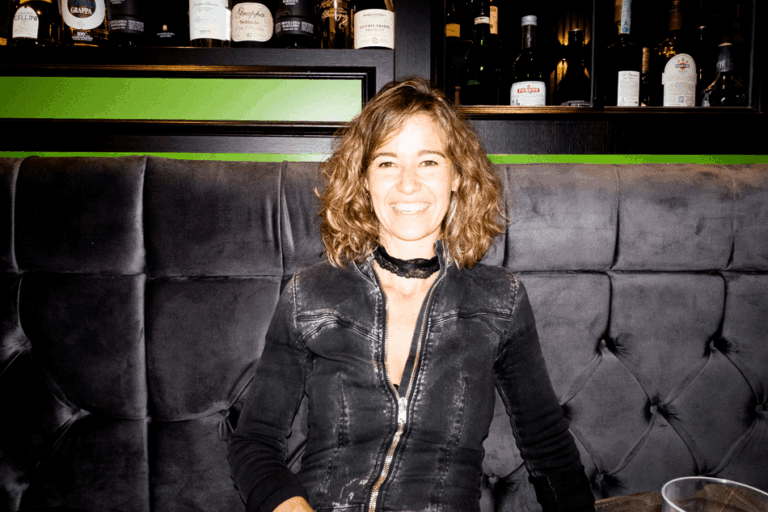
Charlie Bouquett is telling us she’s an introvert. She says this while sitting across from us in Berlin, radiating the kind of magnetic ease that makes you forget what she just said. She means it, though.
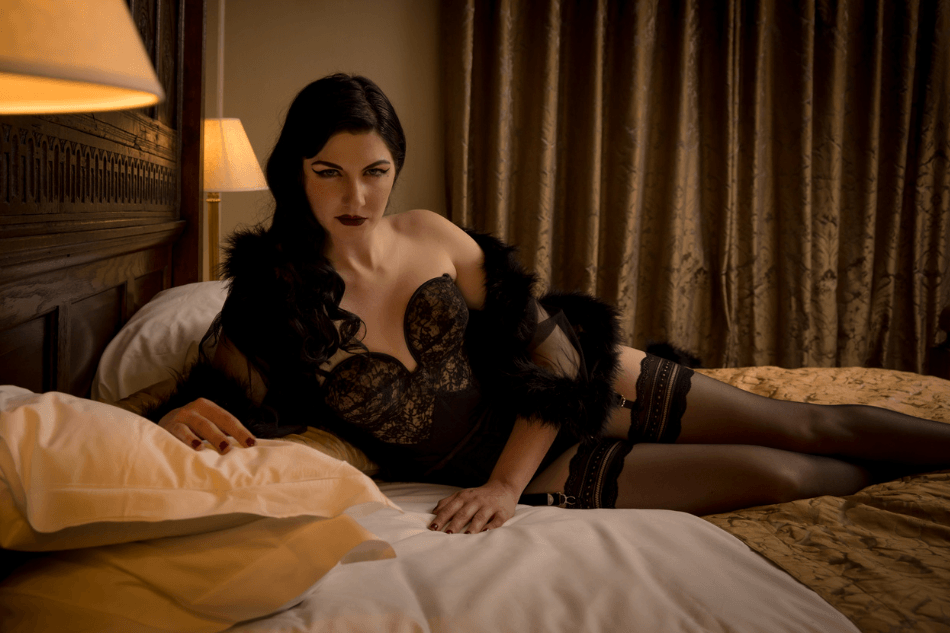
“I’m actually quite shy in a way. And I think people are quite surprised when they hear that from me.”
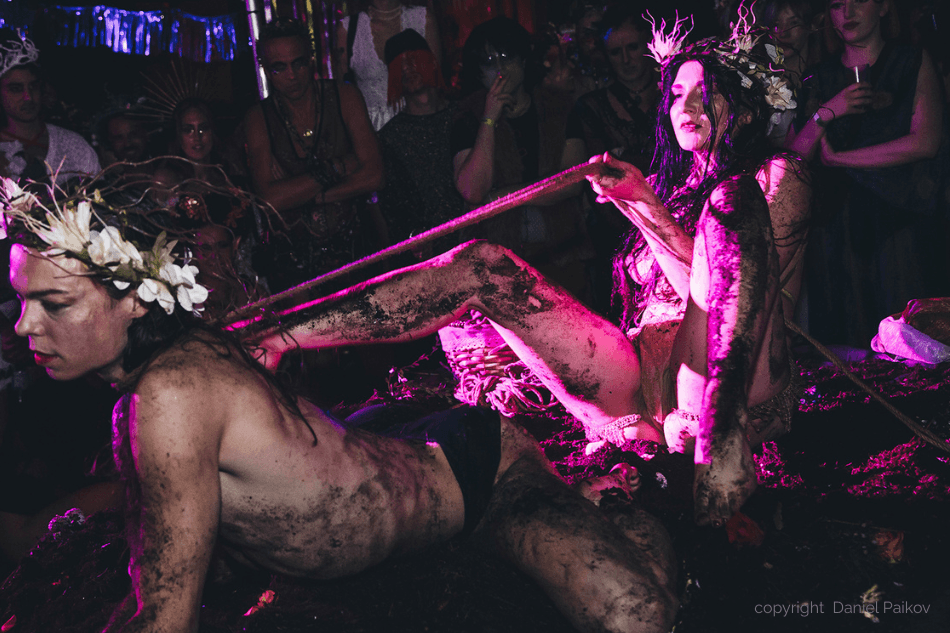
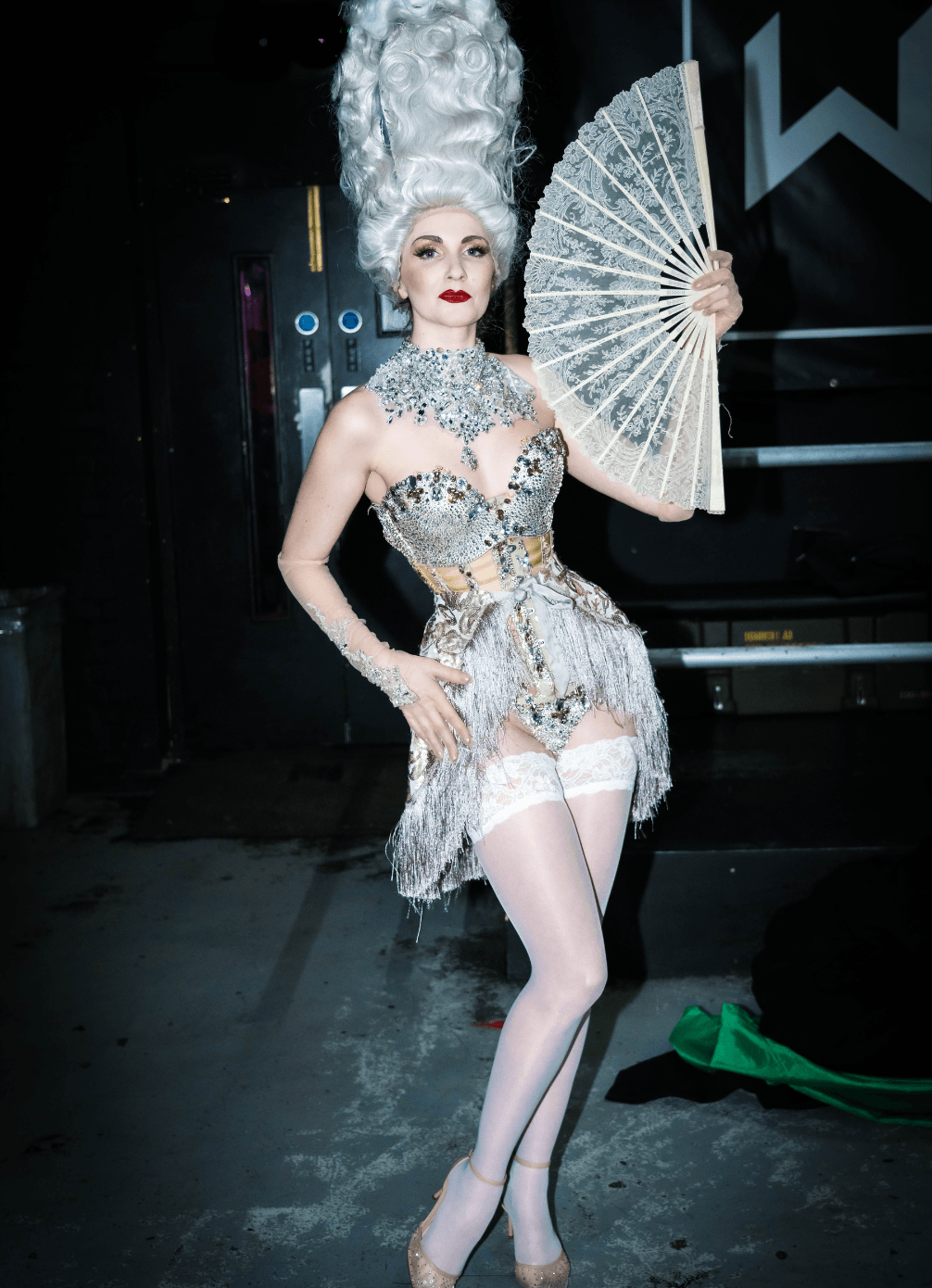
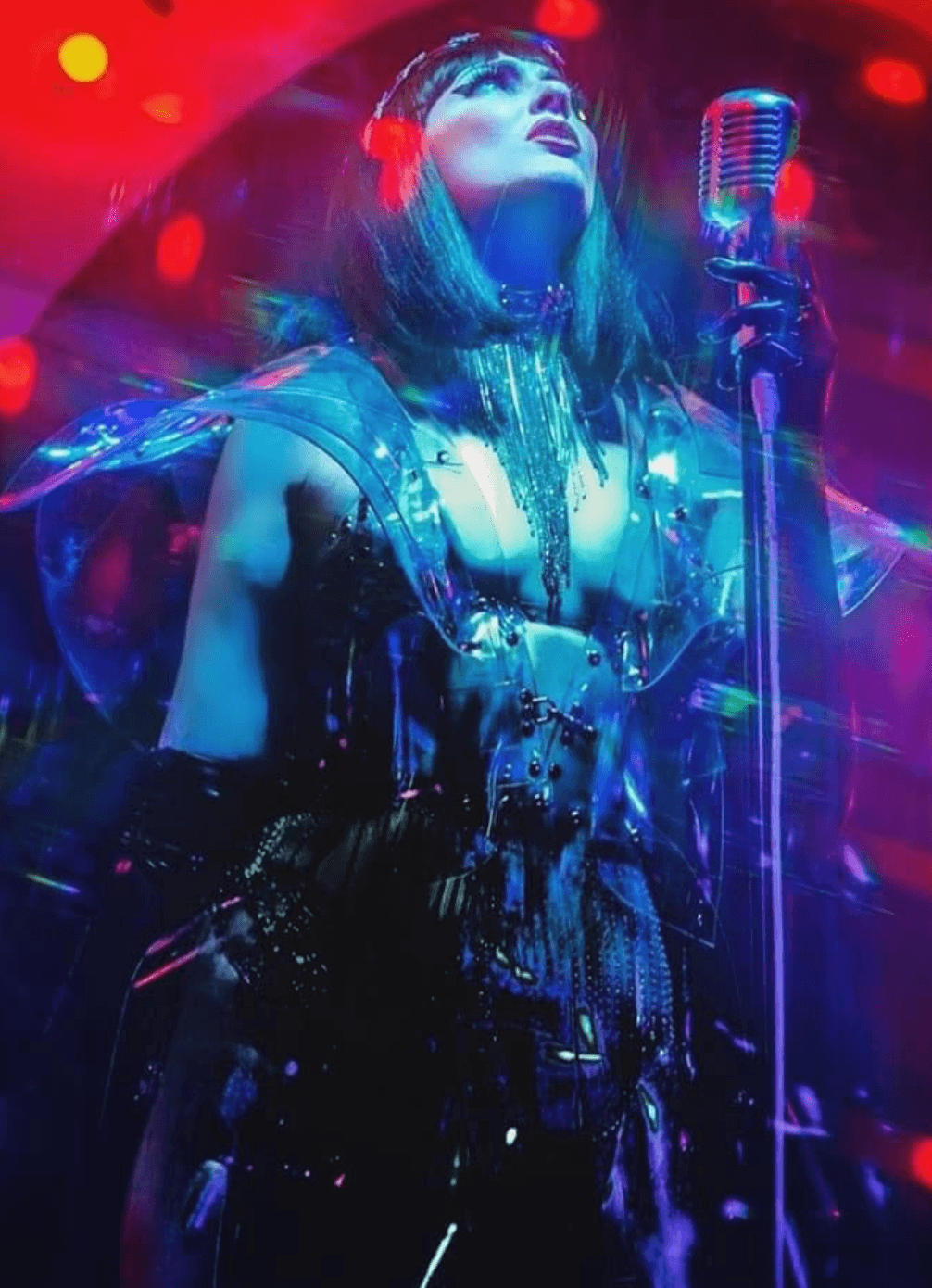
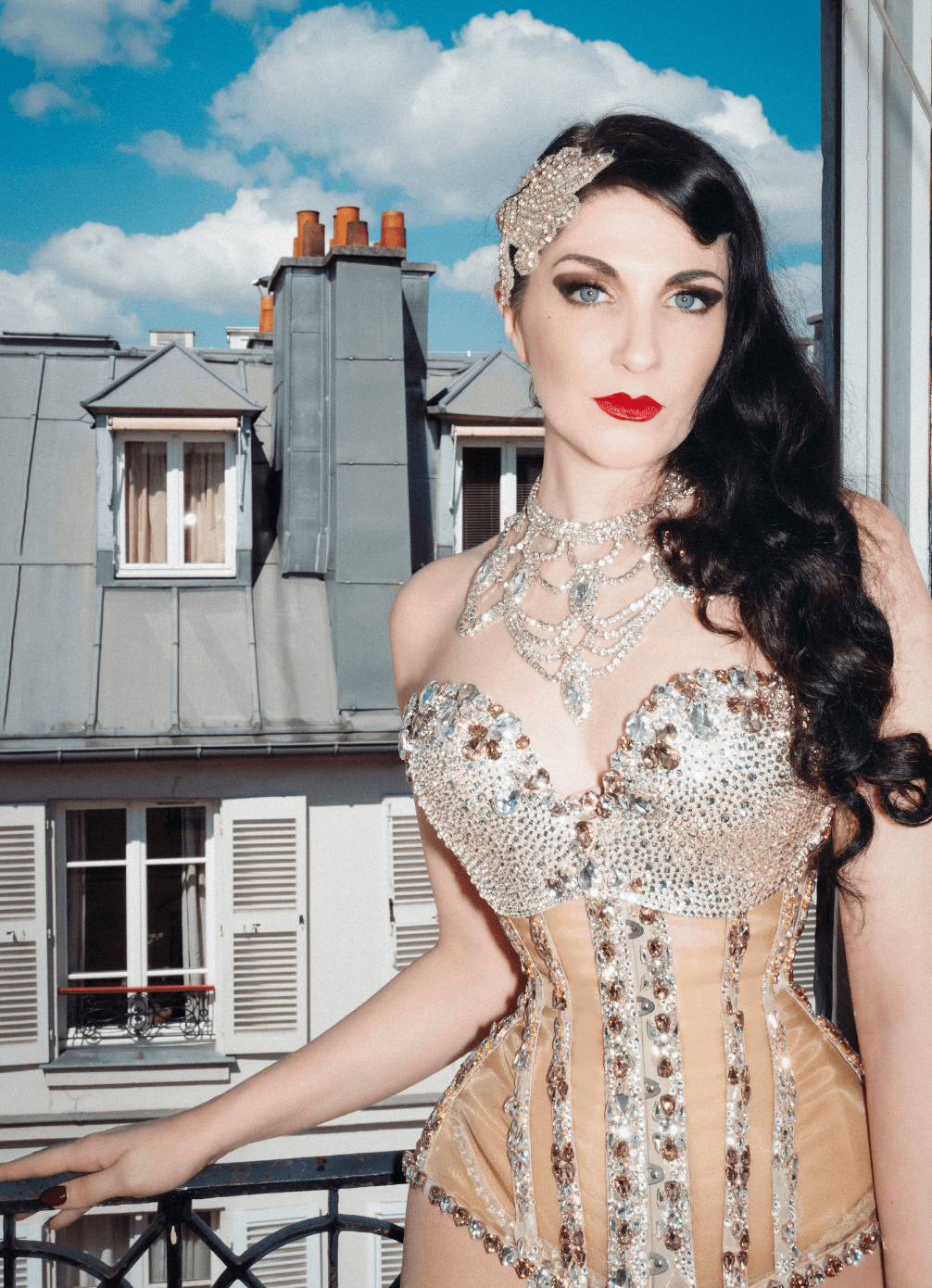
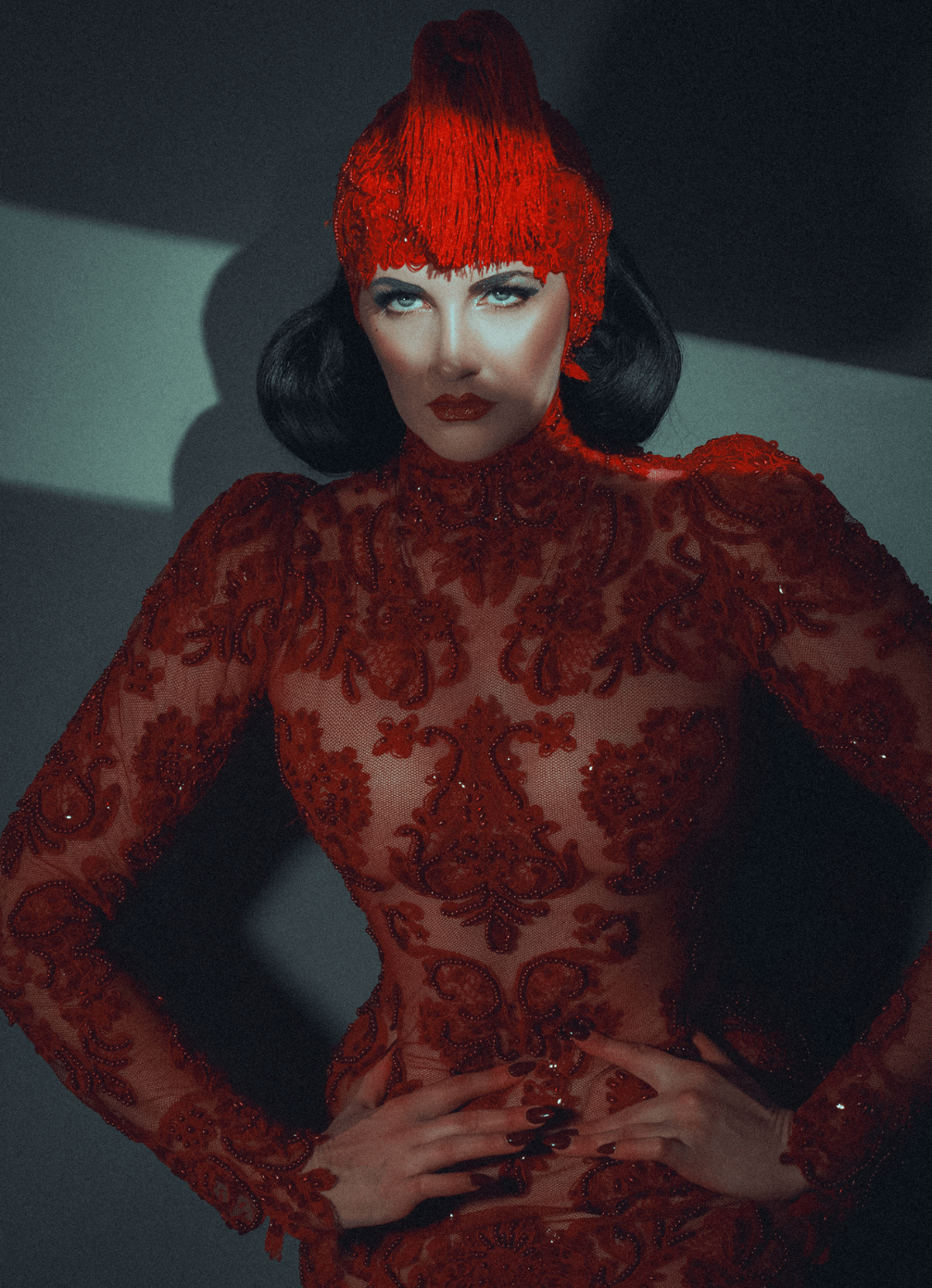
She’s been a professional performer for 16 years. She was touring the world in her teens. A different country every other day, off a flight and onto a stage an hour later. She made three world tours with a circus before she ever got to burlesque. Hand-sewing and rhinestoning every piece herself, she makes her own costumes. She strips in front of hundreds of people and rolls around in broken glass.
And yet. Introvert.
It’s a contradiction that turns out to be the key to everything about her — her art, her politics, her new life in Berlin, and the event series she’s now bringing here. Once you understand the introvert who performs naked for strangers, you understand why neo-burlesque matters right now.
You Can Look, But You Can’t Touch
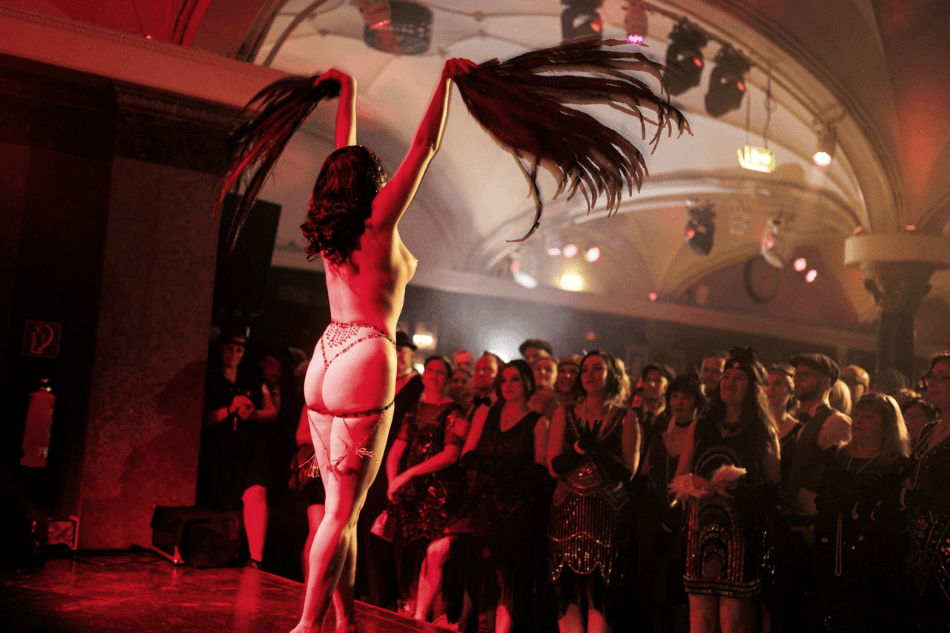
Charlie started performing in circus, but it was burlesque that gave her the precise language she’d been looking for. Specifically: the tease.
“I really enjoy the voyeuristic aspect of it. The ‘you can look but you can’t touch.’ The tease, the play, all of that…”
This isn’t mere performance philosophy. It’s a power structure — one where the performer holds all the cards. For someone who protects her energy fiercely, who gives so much on stage that she needs long, quiet stretches of solitude afterward, neo-burlesque offers something that most social situations don’t: total control over the exchange.
We ask her: “So the stage is like your castle that you can hide behind the walls?”
“Pretty much,” says Charlie. “And flash a leg.”
But the shows aren’t just about that dynamic. They’re art shows in the most literal sense. Charlie studied fine art at Central Saint Martins in London. She connects performing on stage directly to the end-of-semester exhibitions of her student years.
“At the end of every semester, you produce your final piece. It goes into the exhibition. For me, that’s kind of what being on stage is like. I showcase these pieces I’ve been working on for months, sometimes years — the costumes — and then… it’s like a ta-da!”
We give it a name: “Like a Kink Vernissage?” Charlie considers this for a moment, then nods. “Yeah. Yeah, it’s an interesting way to put it.”
What Neo-Burlesque Actually Is (And Isn’t)
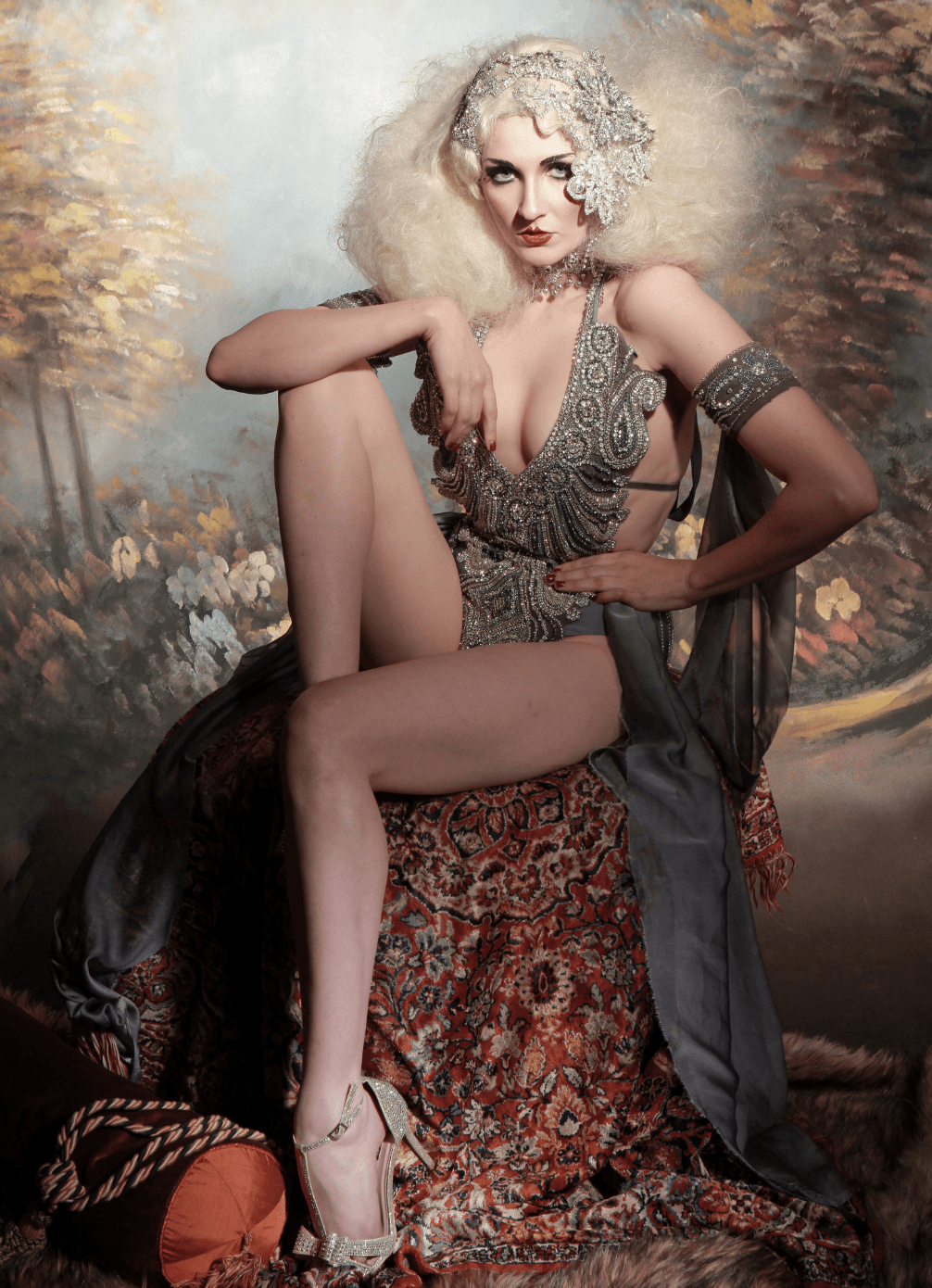
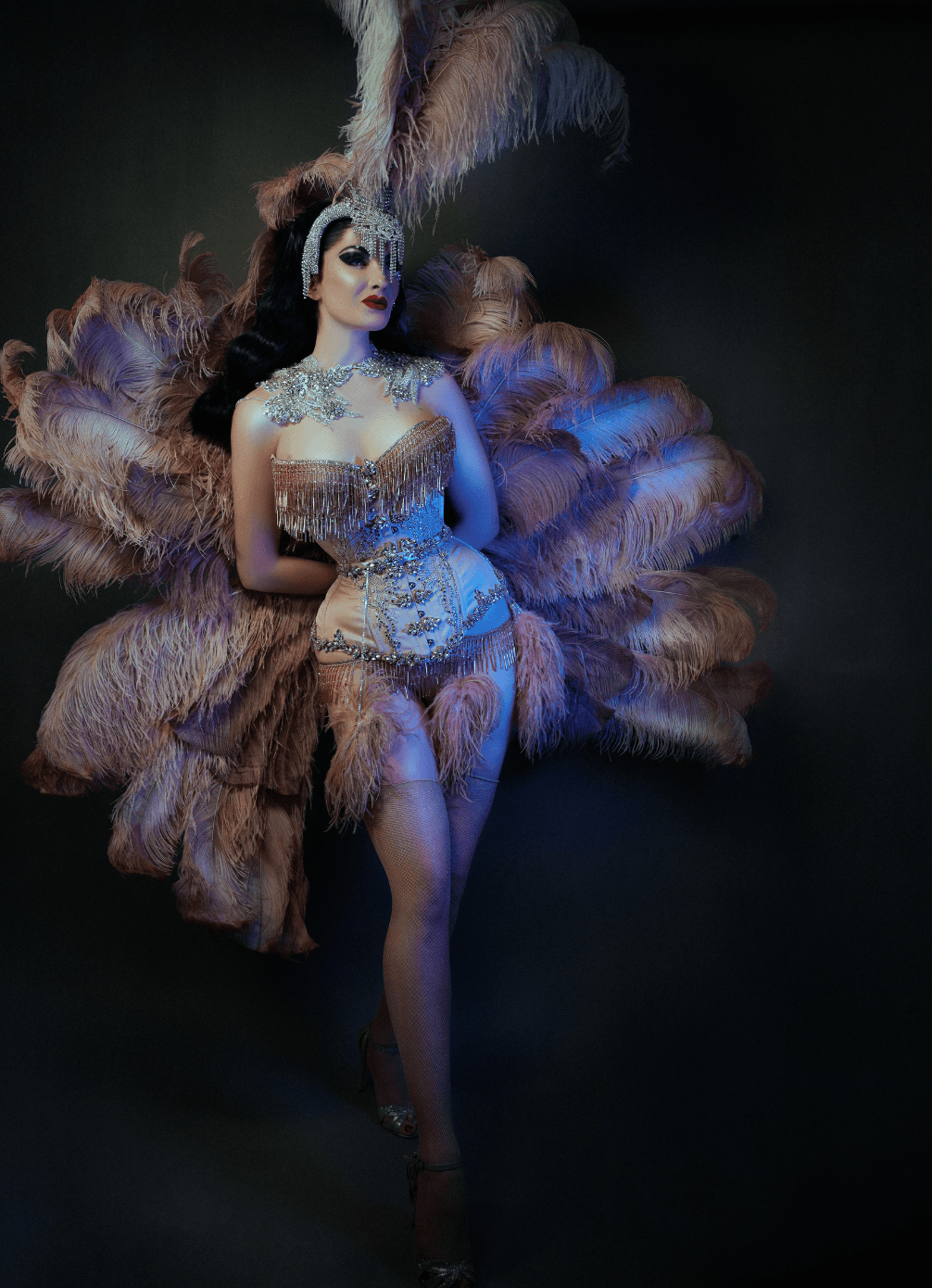
The word “burlesque” conjures a specific image: feather fans, vintage gloves, red lips, a nod to the 1940s. That’s classical burlesque — and it’s not what Charlie does.
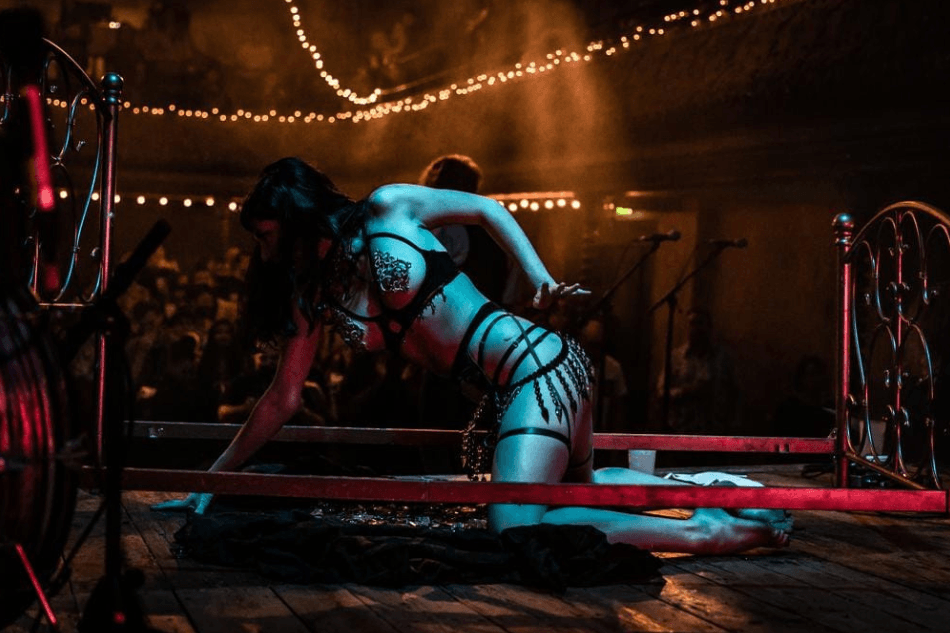
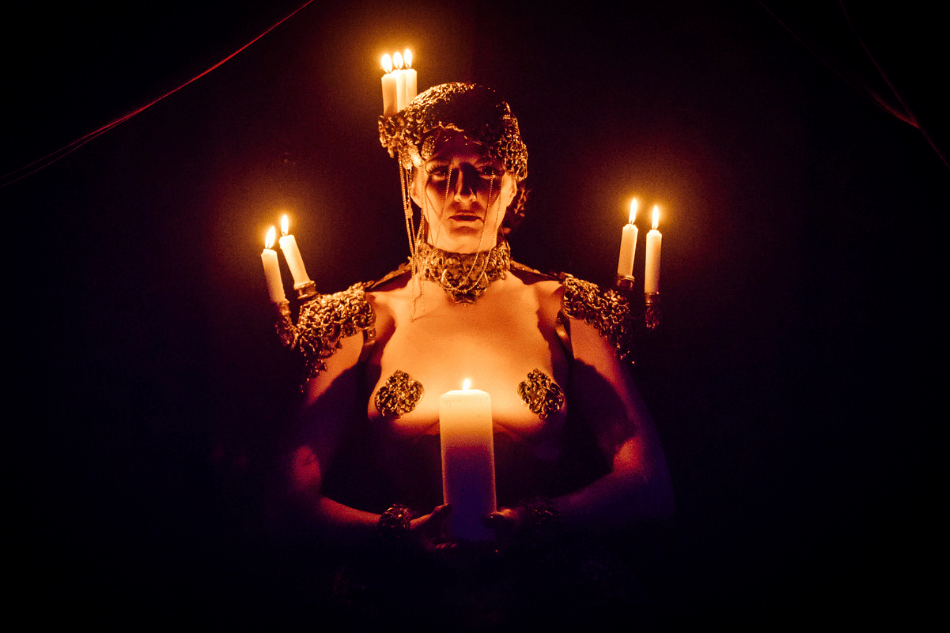
“I have the image of a classical burlesque performer. But what I do falls more into the category of neo-burlesque, which can be a bit more punk, a bit more political. I do a show — burlesque on glass. I strip and then I roll around in a bed of broken glass.”
She also performs with fire tassels and fire eating. There is always, she explains, something in her shows that is a little more daring, a little more dangerous. This isn’t shock for its own sake. It’s the opposite of presenting a polished, perfect image — and that refusal is, itself, political.
“I don’t want to present as this perfect image,” she says. “Because I’m not perfect.”
Giada looks at her: “Really? When I see you, I think — oh, this is the perfect woman!” Charlie laughs. She finds the idea slightly absurd. That gap — between how she’s perceived and how she sees herself — is precisely where her art lives. Neo-burlesque isn’t about aspiring to a beauty ideal. It’s about exposing the ideal as a construction. And then rolling around in glass anyway.
A Queer Person in a Patriarchal World
Charlie grew up queer, went through every possible phase of questioning gender — sometimes leaning toward masculinity — and eventually arrived somewhere that feels like home: a deep embrace of her own femininity, on her own terms.
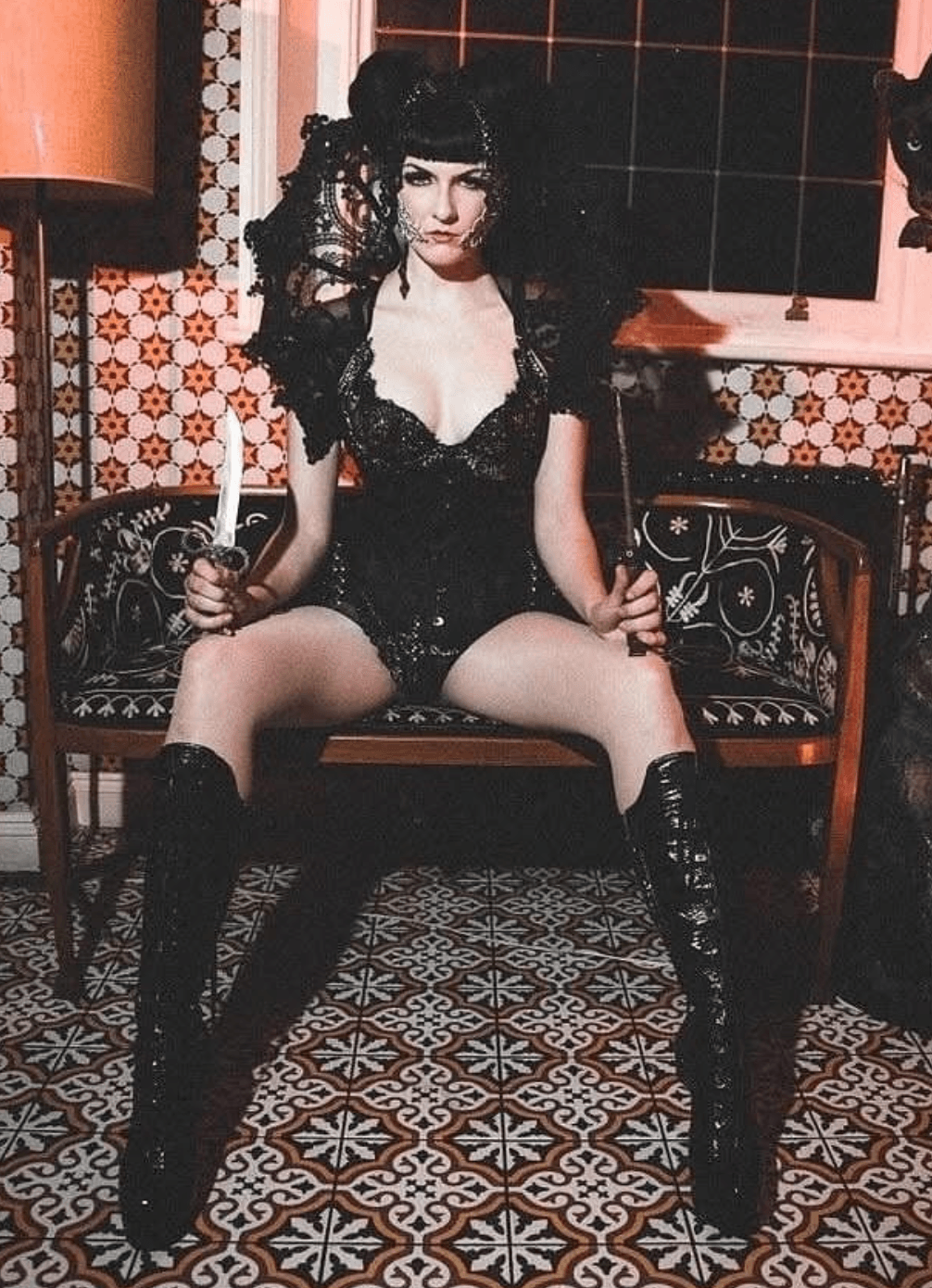
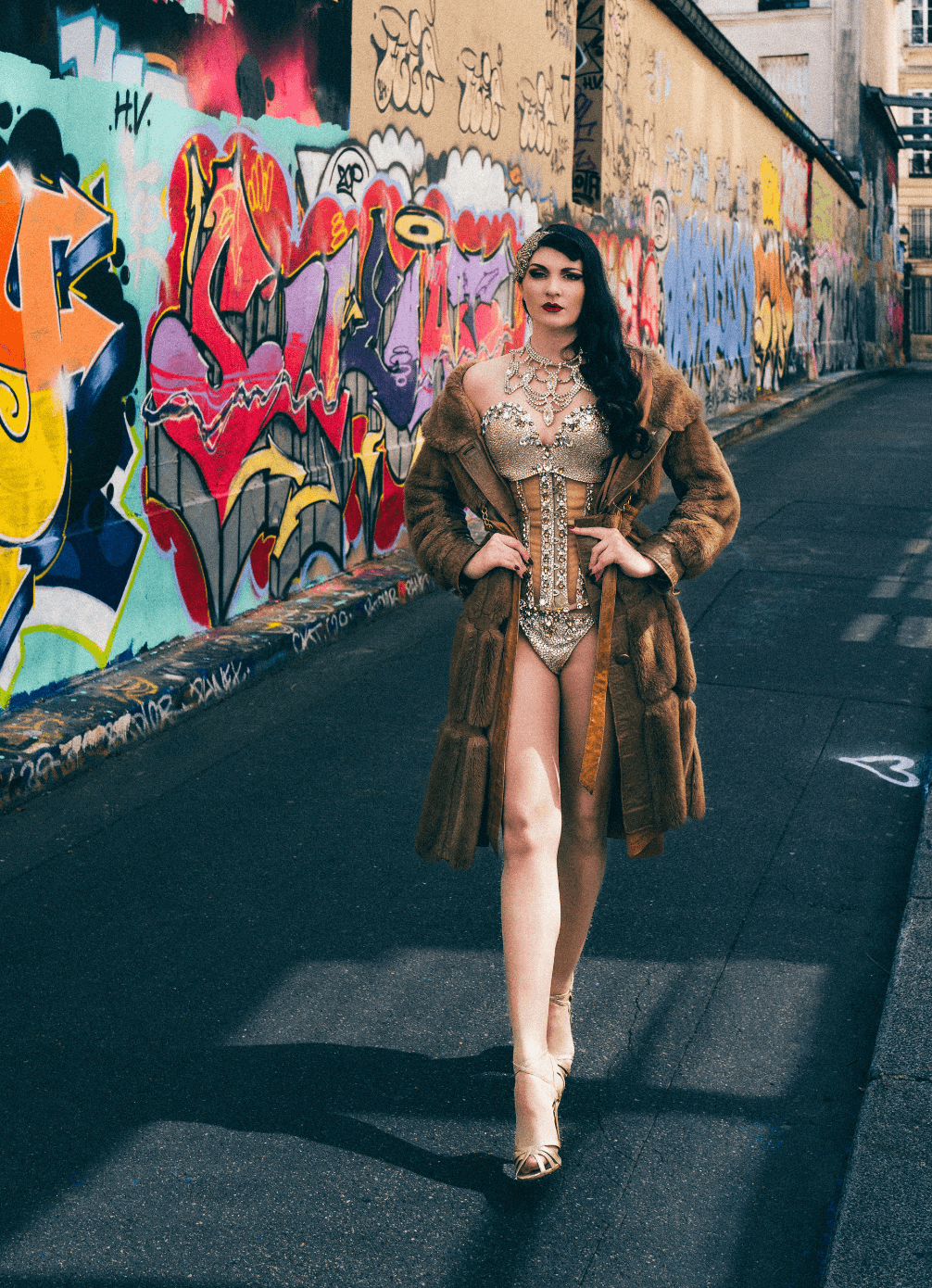
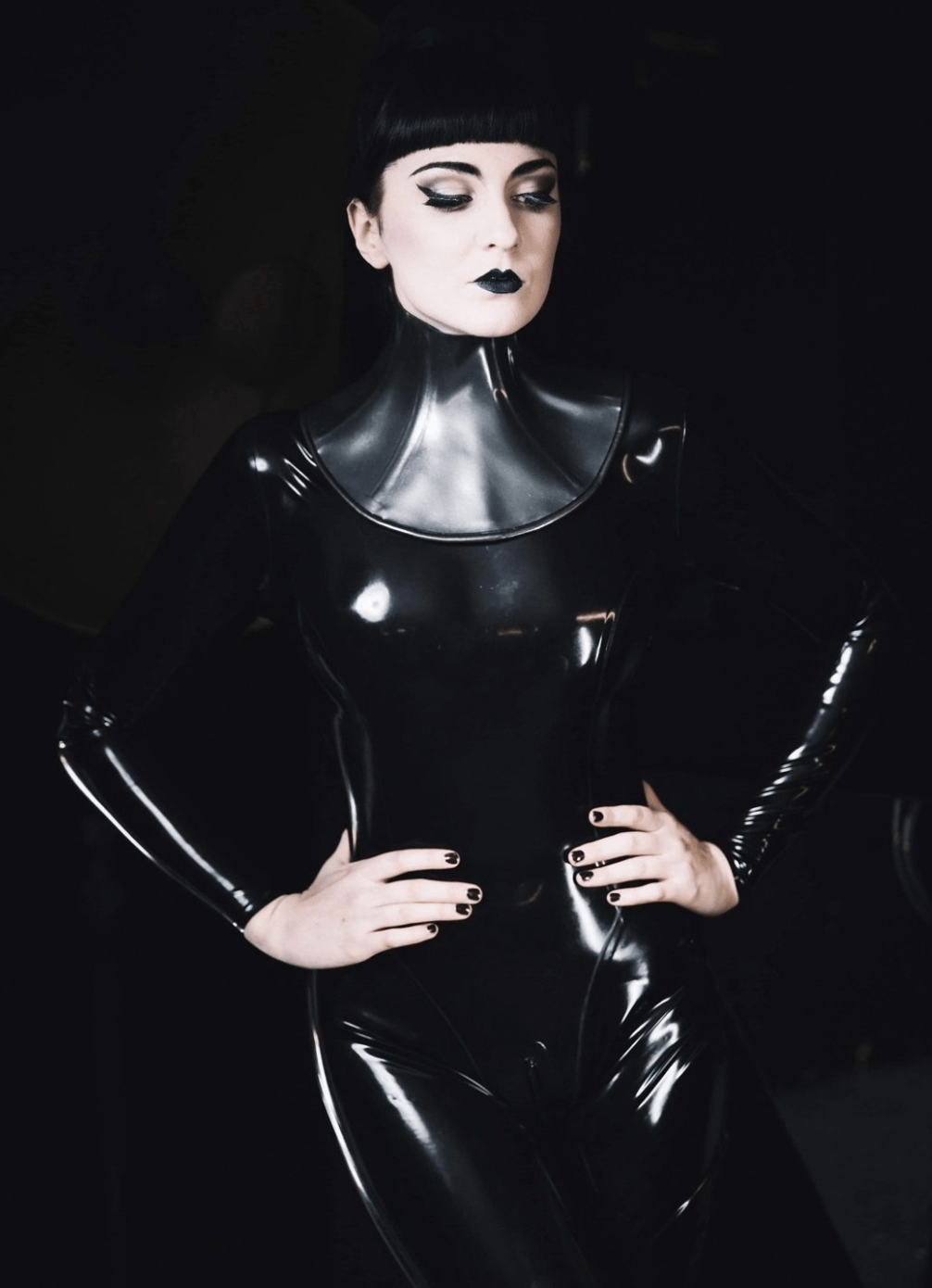
“I’m a deeply feminine person. I grew up queer. I’ve been through every possible phase of questioning gender. And then I got to a point where on stage, I really want to actually just embrace my feminine side and celebrate what I was born with — without trying to alter it or change myself in any way. Just to present exactly who I am, as I was intended to be.”
This is not a conventional femininity. She’s quick to say that femininity doesn’t necessarily link to being a woman biologically — it’s something she embodies on stage while her mentality and sexuality might resonate more with what culture codes as unconventional. The categories don’t quite fit, and she doesn’t need them to.
What she does need is for the patriarchy to stop telling her what her body should look like. She’s watching friends start with Botox, diet culture, “enhancements.” She’s not telling them what to do. But for herself, the decision is clear.
“In a society where the patriarchy is constantly trying to tell us we’re too big, too small, too loud, too quiet — anything to do with femininity and being in a female body is constantly scrutinized. So many of our beauty standards come from that. Going on stage and doing what I do is a kind of fuck-you to all of that. I’m not conforming to those standards.”
The non-conformity isn’t a manifesto she delivers to the audience. It’s simply the act of standing on stage as she is, in a world that would prefer she look like someone else. The performance is the argument.
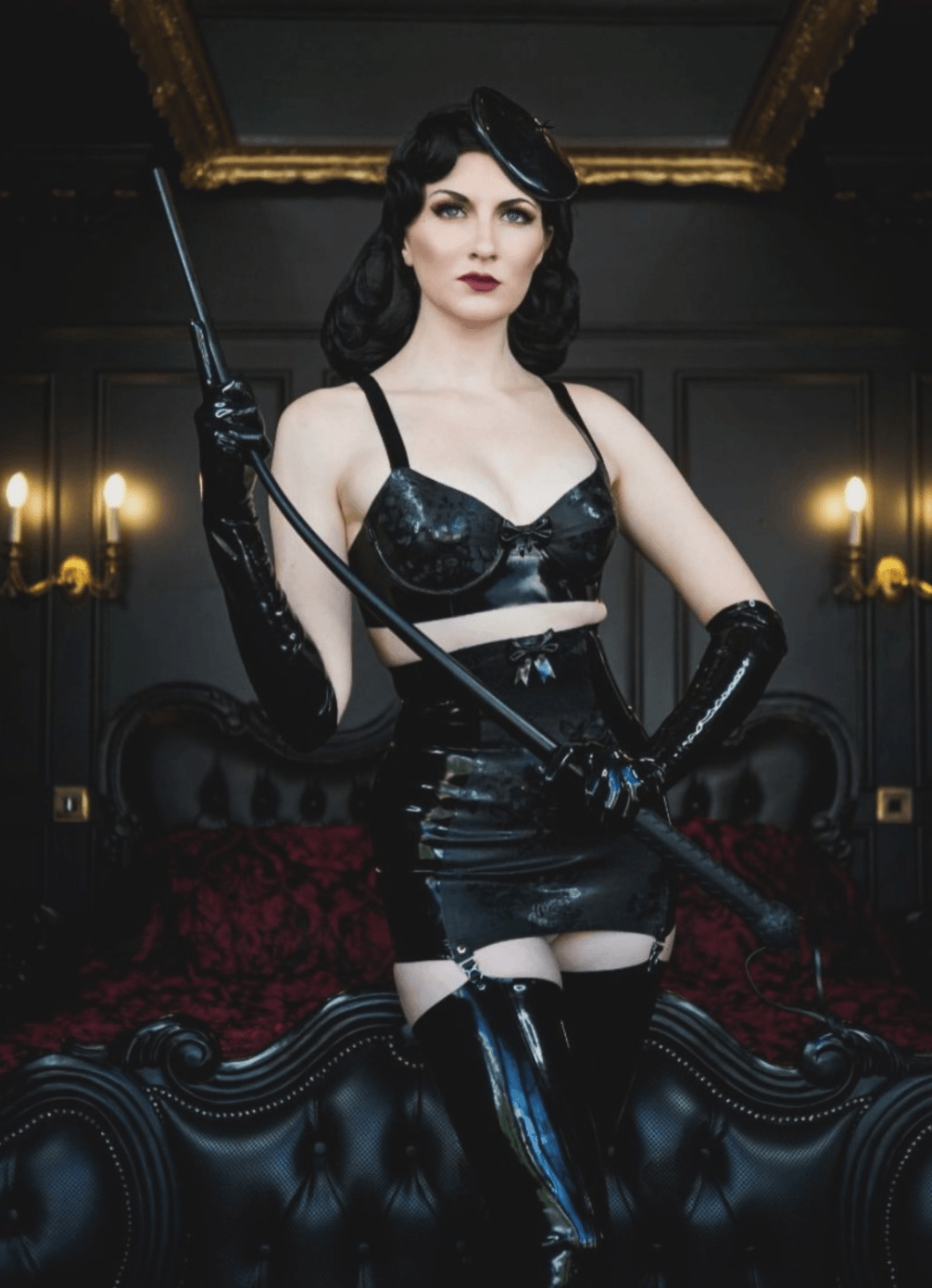
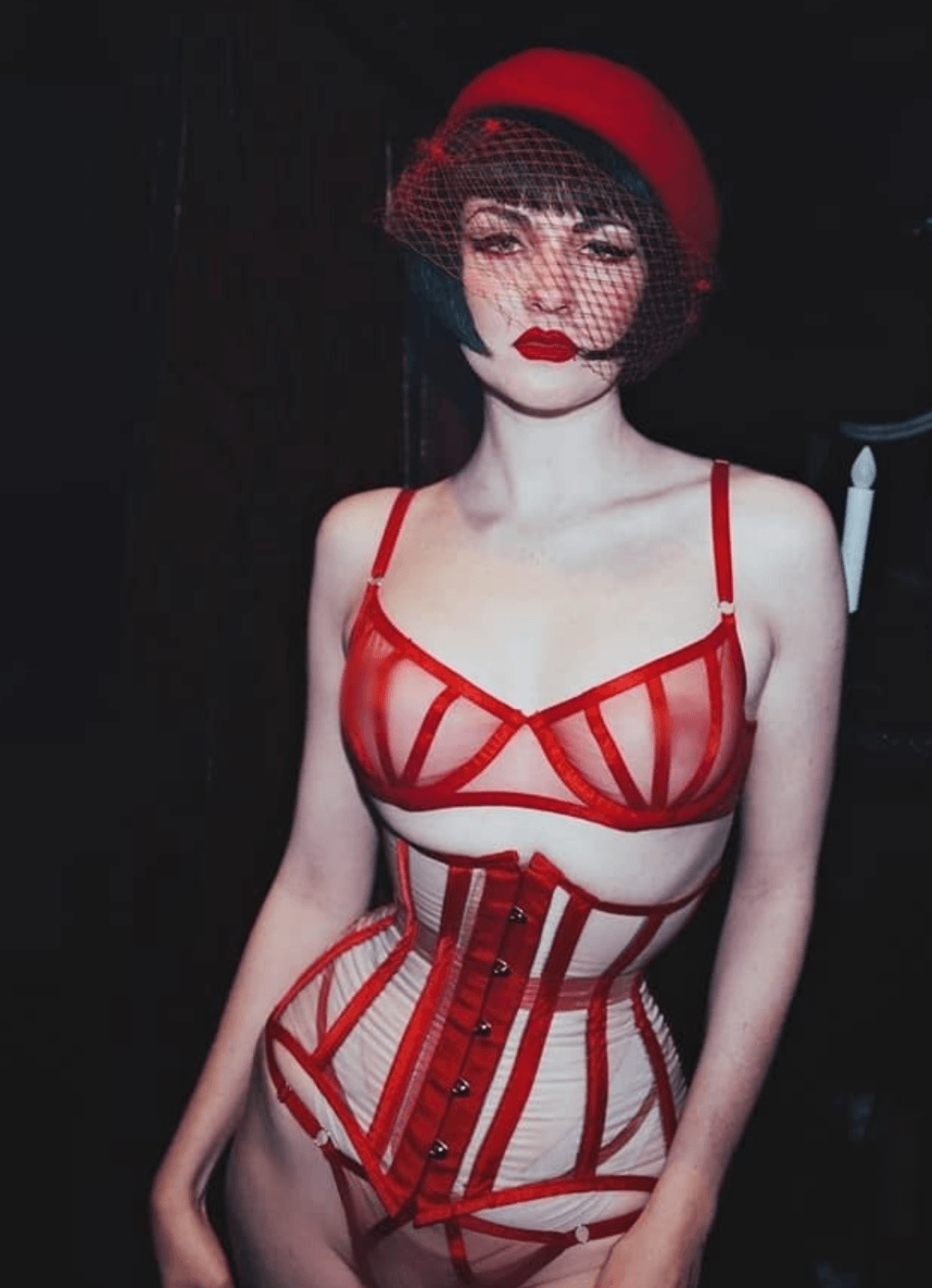
The Sublime Society: Erotic Neo-Burlesque Events Built on Consent
In 2024, almost by accident, Charlie became an event producer. The artist Marie Sauvage reached out wanting to collaborate. Charlie said yes, realized she needed a brand name, got on a flight from LA to London, and landed on the other side with a name, a logo, and a half-built website.
“I don’t think I’d slept for like two days,” she says. “That’s the ADHD part.”
The brand is THE SUBLIME SOCIETY. And it’s exactly the kind of event that Berlin is missing.
“The Sublime Society is an erotic event. I’d describe it as a soft invitation into a different kind of world — a kinkier space, without it being a play party. It caters to people who are maybe partnered, or in consensual non-monogamous relationships, who want to explore more but aren’t sure where to go or how to start. They might find a fetish club far too intimidating, but a standard burlesque show not enough. My event brings those two worlds together.”
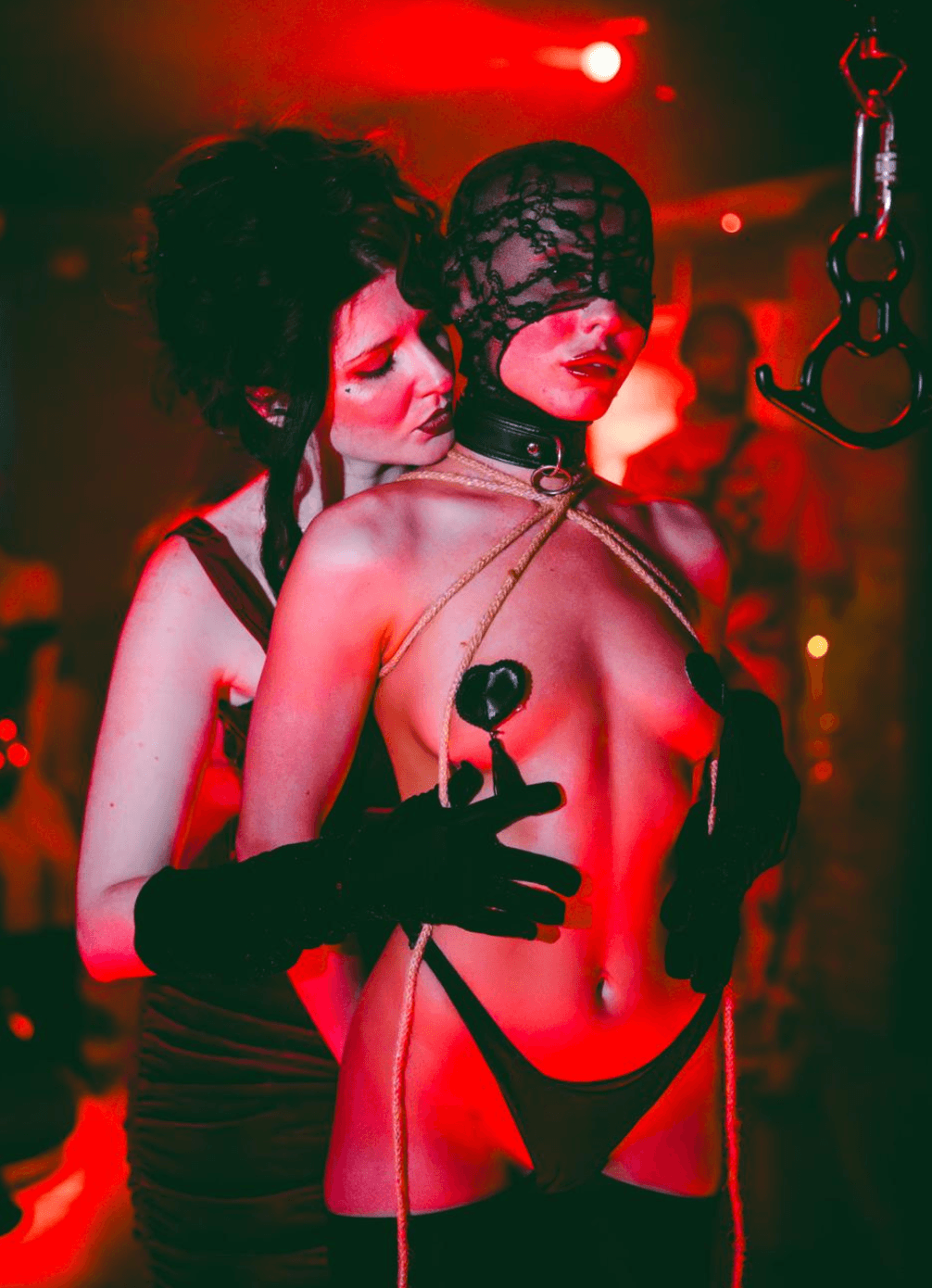
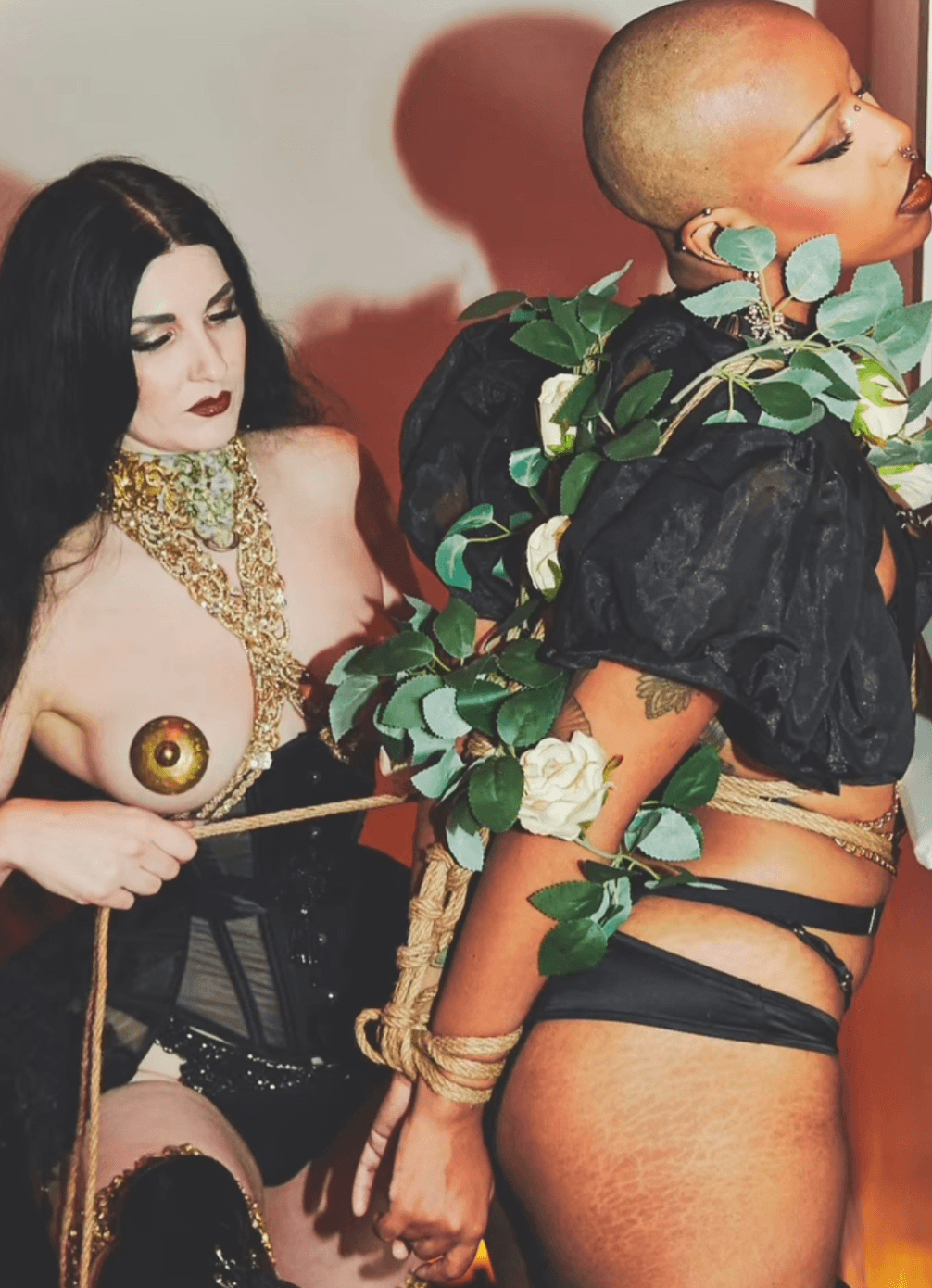
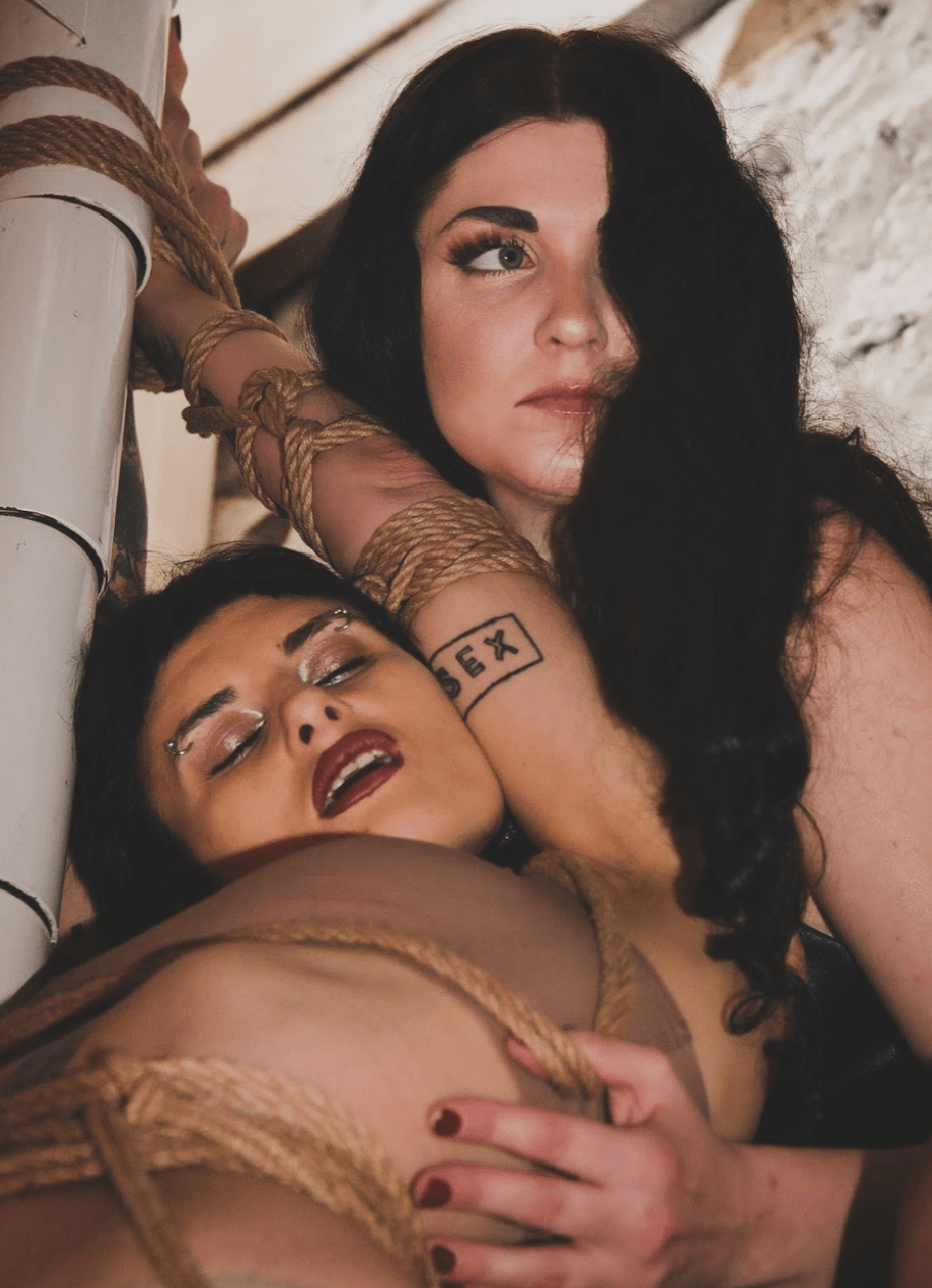
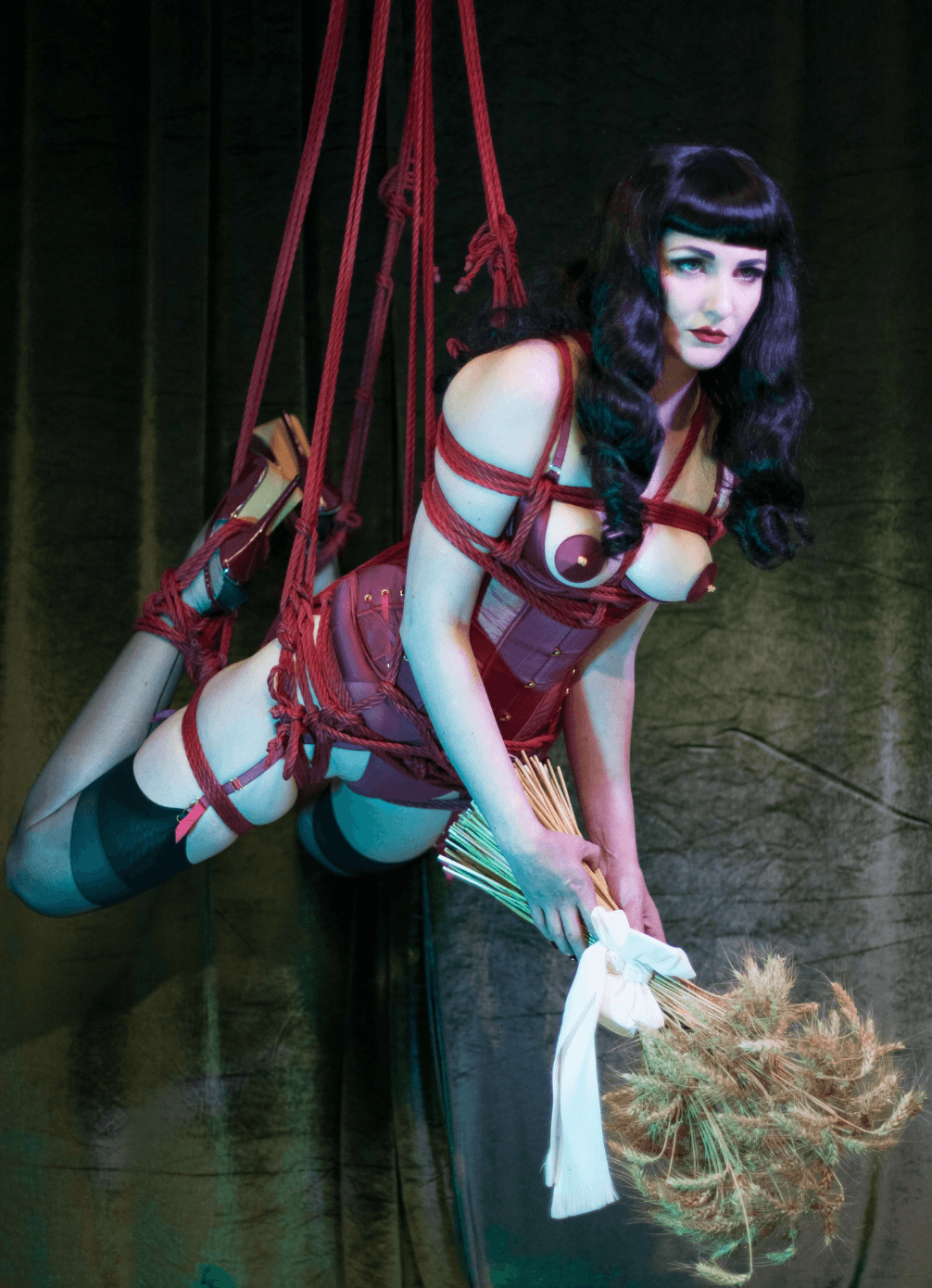
The format is precise. There’s performance — neo-burlesque, variety acts. There’s a heavy emphasis on rope play, with professional riggers available for one-on-one sessions with couples after the show. There are things in the space for people to explore. But it is not, she’s emphatic, a “fuck fest.”
“It’s very much like the aperitif,” she says. “For the rest of your evening. And then we’re like: okay, now go forward.”
Every event in London sold out in the last months. And now she’s bringing it to Berlin.
Consent is built into the architecture of The Sublime Society, not bolted on as an afterthought. This matters. When the conversation turns to the broader vision — Berlin as a city that teaches people how to navigate desire with honesty and respect — Charlie lands on something important.
“It’s not about the fuck. It’s about: what kind of person are you? What are your values? It’s about equality. About being open, respecting the boundaries of other people, knowing what consent is, knowing what communication is. If you can communicate in your sex life, you can also communicate outside your sex life — in an office, in a supermarket.”
Or, as Giada adds: in parliament.
London Hollowed Out. Berlin Filled Back Up.
Charlie moved to Berlin last year. Not planned. She was offered an apartment and said yes, almost on impulse, because the life she’d been living in London had quietly fallen apart.
“The fabric, the foundation of my life in London had kind of unraveled. I was performing, but in a post-COVID world it just wasn’t the same. I wasn’t getting the same enjoyment or pleasure out of life. And I was so lonely — for someone who knows a lot of people. So incredibly lonely.”
When the apartment in Berlin came up, she had nothing to lose. She moved with zero plan and no work lined up.
“The rest is history,” she says. “And it was the best decision I ever made.”
The contrast with London is something she returns to repeatedly. London, she explains, has been hollowed out by money. Artists and people doing interesting things have been priced and pressured out. What’s left is a city that asks of everything: what’s this for? How do we make it profitable? How do we scale it?
“It drove away a lot of people who were doing really interesting things, and it left this very hollow, empty feeling in the city — where the only people who could afford to do these things are probably not the kind of people you necessarily want to support or be behind.”
Berlin, by contrast, doesn’t ask what something is worth. It asks whether it’s alive. The value is the doing.
Neo-Burlesque Art as Anti-Populism
At one point in the conversation, Giada makes an observation that clearly lands for Charlie — visibly, emotionally. Talking about populism: the way right-wing movements sell a worldview in which everyone is a potential enemy, in which foreigners are dangerous, in which the correct response to the world is to build fences and stay inside them.
“What you do,” Giada says, “is just opposing this concept. By showing: just let’s be together. Not everybody is your enemy. I’m getting vulnerable. I’m showing myself in a vulnerable situation, but it’s all fun and great. You’re destroying the populist narrative with these things.”
A few tears show in Charlie’s eyes. Then she laughs about it. Then says:
“There is never a more important time to reconnect with other humans. Especially in this day and age where we are just looking at everything through a screen. There are some horrific things going on right now. And yeah, we all fall victim to getting sucked into it. But there are so many things that are in our control — like connecting with other humans. Going to have these experiences with other people. Flirting with a stranger. Falling in love. Just… yeah.”
It does feel strange sometimes, she admits, to be promoting sparkly outfits and erotic events when the world feels like it’s falling apart. But that’s exactly why it matters. The gatherings Charlie creates — like the publishing house that invited her to this conversation — are practicing something. They’re demonstrating that a different way of being together is possible. One based on curiosity instead of fear, on consent instead of coercion, on pleasure as a form of dignity rather than something to be ashamed of.
“I hope from here we can change something, because I don’t see other places that are so… But it’s not about Berlin — it’s about spreading this message from Berlin. Because the world is broken. We have only war. We have to change our world. And Berlin is a good place to start.”
What Berlin Can Become
The Sublime Society is coming to Berlin on Wednestay 13 May, 2026 at Lillium in Kreuzberg. You can find Berlin tickets here.
Charlie has been scouting locations — she went to see a space in Kreuzberg, on the Spree — and she’s looking for the right venue: something that fits the society theme, that holds the atmosphere she’s built so carefully in London. A place that’s not a club, not a sex party, not a cabaret — but all three, somehow, at once.
Long-term, she’d like to open a space here. A permanent venue that lives between all the things she does. Given that Berlin currently has 1.8 million square meters of empty office space that nobody is renting, the timing might be right.
For now: the first event is coming. If you’ve ever felt like fetish clubs were too much and regular nightlife wasn’t enough — if you’ve been curious about rope play but didn’t know where to start — if you want to spend an evening in a room full of people who are being genuinely, deliberately, carefully present with each other — The Sublime Society might be exactly what you’ve been looking for.
You can look. For once, that’s enough.
Not in Berlin?
Check out the London events here.